Is A Mount Cook Scenic Flight Ok For People Afraid Of Heights?
How a fear of heights actually plays out on a Mount Cook scenic flight: aircraft size, flight lengths, landings, seating, and which short options suit nervous flyers.
For many nervous flyers, yes, because the experience is closer to a smooth bus ride at altitude than to standing on a ledge. You sit belted inside an enclosed cabin with no exposed edges, no glass floor and no step out over a drop. Flights here run from 25 minutes upward, weather cancellations are fully refunded, and short options exist for people who want the view without a long commitment.
That is the honest short version. The longer version matters, because a fear of heights is not one thing. For some people it is a fear of falling, and an enclosed cabin with a seatbelt addresses that directly. For others it is a visceral reaction to looking down, and a window seat over the Tasman Glacier will still deliver plenty of looking down. Which camp you sit in changes the answer, and this article works through the specifics: the aircraft, the flight lengths, the landing, the seating, and what to do if the anxiety builds mid flight.
None of this is medical or psychological advice. It is a plain description of what the flights covered here actually involve, drawn from operator descriptions and the figures on the booking pages, so you can match the experience against what you know about your own reactions. If your fear is severe, a conversation with a professional is a better starting point than any article.
A good first step is simply seeing which flights exist and how long each one keeps you airborne.
What Aircraft Will You Actually Be In Over Mount Cook?
The ski planes and the helicopters are both small aircraft, which means compact cabins, a short aisle to cross, and a window within easy reach of almost every seat. The overflight options use fixed-wing aircraft, and Air Safaris assigns a window seat to every passenger. Nobody sits in a middle seat staring at a wall on these flights.
Small cuts both ways for a nervous flyer. A nine-seat cabin feels more exposed than a jet because you can see the pilots, hear the engine change pitch, and sense every movement more clearly. There is no walking away from the sensation and no cabin crew distraction. On the other hand, the small cabin also means you are never far from another person, the flight is short, and the pilot can talk to passengers over the intercom about what the aircraft is doing, which many anxious flyers find steadying rather than alarming.
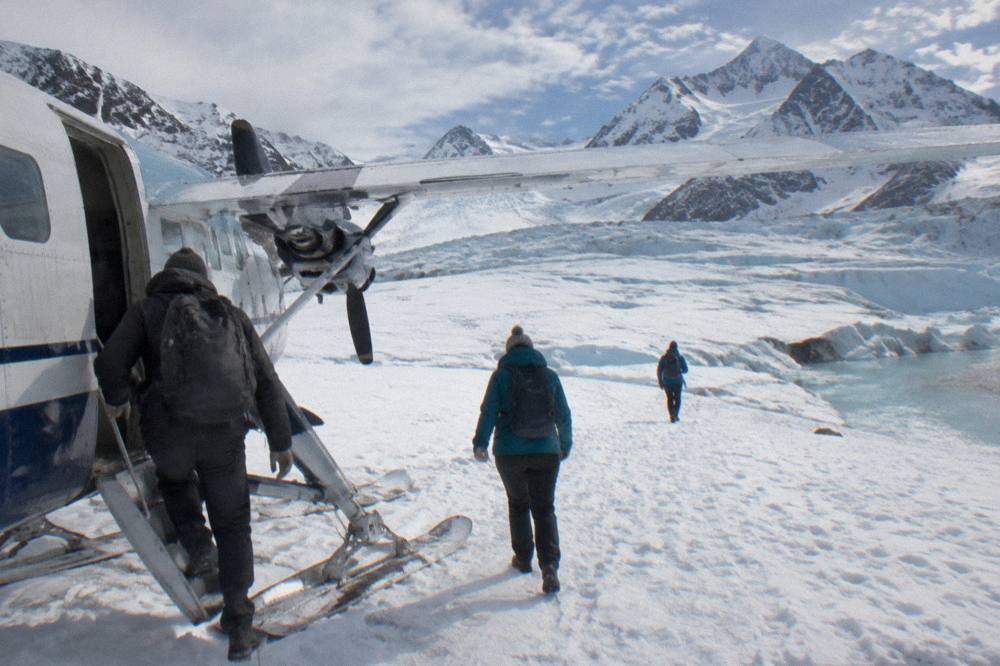
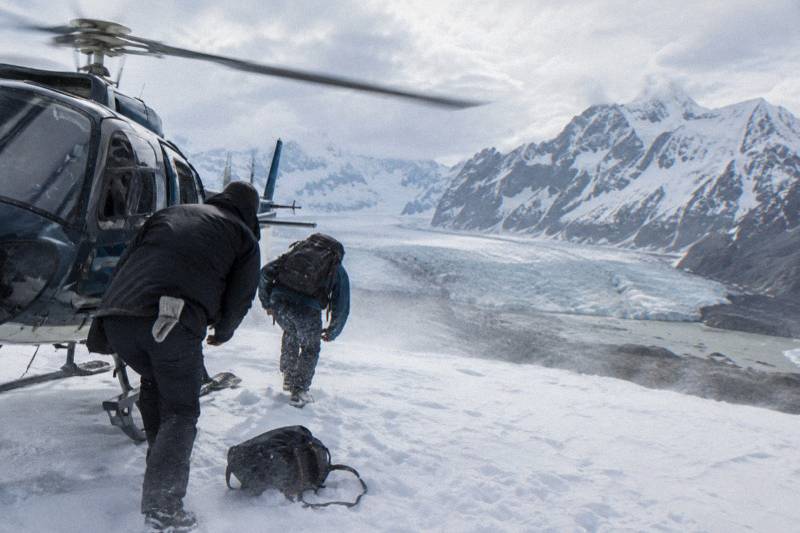
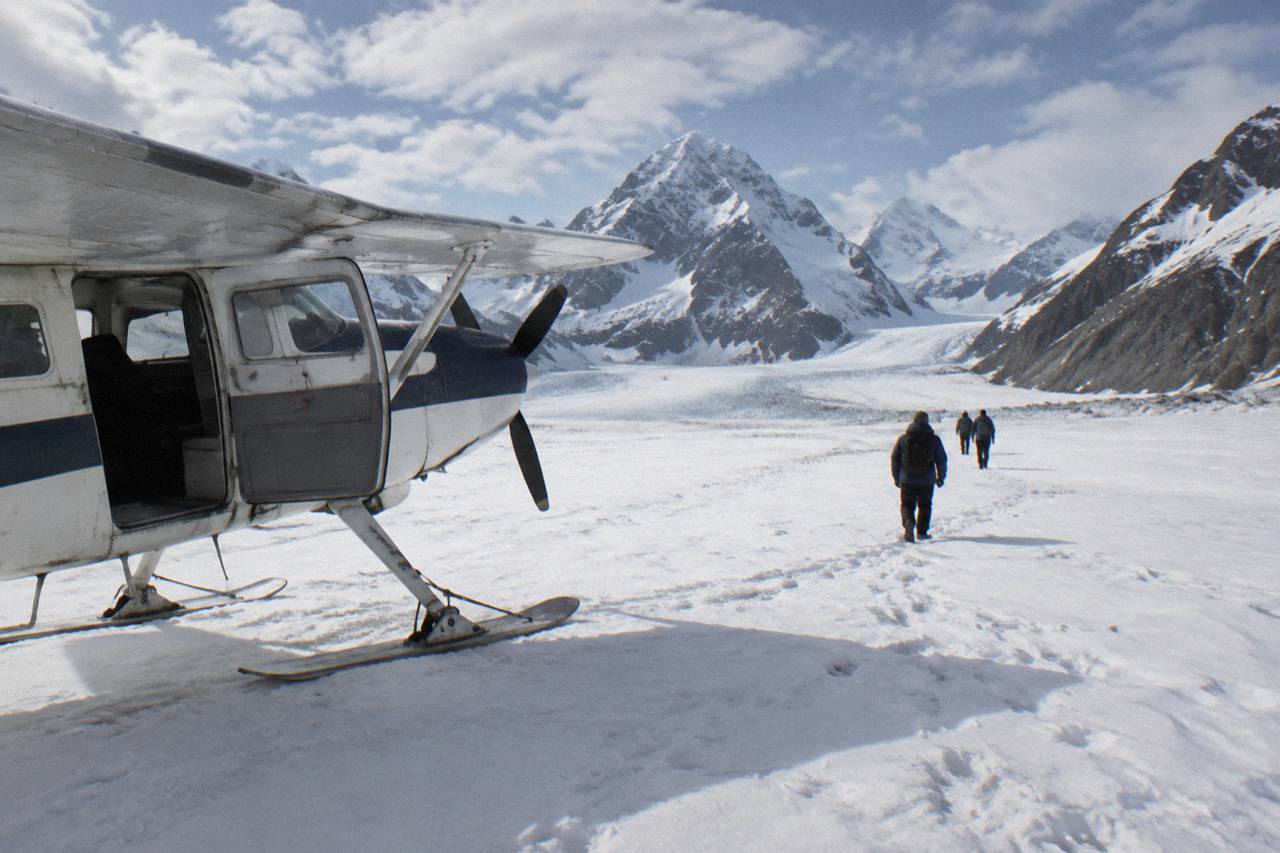
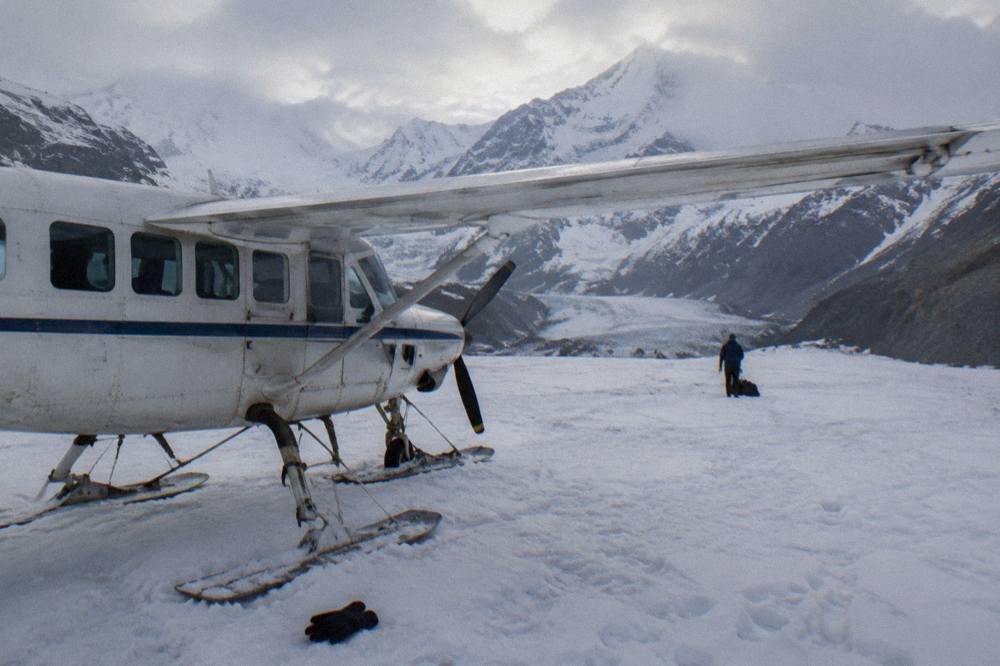
The seatbelt-and-seat reality is worth spelling out because fear of heights often pictures something else entirely. You are seated the whole time, the door stays closed, and the landing, when a landing is part of the flight, happens on a flat snowfield where the aircraft simply settles onto its skis or skids. Operators describe the snow landings as happening on the glacier itself or on a peak or ridge snowfield, with the exact site confirmed on the day. Whether you step off at the landing is best asked of the operator; stops that touch down typically allow 10 to 15 minutes for photos or short walking, with exact time varying by conditions.
Seating is assigned by the pilot for weight and balance, so you cannot book a specific seat, and passengers may be weighed at check-in. The individual weight limit is generally 116 kg on the Mount Cook Airport ski plane and helicopter flights, with other operators stating limits from 120 kg to 200 kg on their own flights. If a window feels worse than a wall to you, that preference is worth raising with the operator directly, though the pilot has the final say.
| Flight | Aircraft | Seats | Duration | From (USD, per person) |
|---|---|---|---|---|
| Glacier Highlights Ski Plane (22551p5) | Ski plane | 9 | 45 minutes | $397.02 |
| Ski Plane And Helicopter Combo (t147603) | Ski plane + helicopter | 9 and 5 to 7 | 45 minutes | $277.00 |
| Grand Circle Ski Plane (22551p7) | Ski plane | 9 | 1 hour 5 minutes | $453.82 |
| Scenic Helicopter Flight With Alpine Landing (t216693) | Helicopter | 5 to 7 | 25 minutes | $194.00 |
Are Shorter Mount Cook Flights Better For Nervous Flyers?
Yes, and the shortest flight covered here is the 25-minute Scenic Helicopter Flight with Alpine Landing from Mount Cook Airport, from $194 per person, rated 4.7 across 530 reviews. It is one of the most reviewed flights among the options covered here, and its 25-minute duration makes it the natural first flight for someone unsure how they will react. Shorter exposure, less time to spiral, and a full refund if weather cancels the whole thing.
The logic of starting short is simple. Anxiety tends to build on anticipation, and a 25-minute flight caps the anticipation window as well as the exposure itself. If the flight goes badly, it is over quickly. If it goes well, and for most nervous flyers it does, you have a data point from your own body rather than a guess, and you can book a longer flight on a later day with far more confidence.
The 25-minute helicopter flight includes an alpine landing on a peak or ridge snowfield, weather permitting. One honest note from the operator's own descriptions: the alpine landing site has snow most of the year but not roughly December to March, so a summer booking may mean landing on rock or scree rather than snow. The glacier landings, directly on the ice, give more certainty of snow year round. Neither type of landing involves anything vertiginous; both are flat surfaces where the aircraft touches down and lets you step out.
For a middle option, the ski plane flights from Mount Cook Airport run 45 minutes to just over an hour, all from $277 to $453.82 per person depending on length and aircraft. The 45-minute Glacier Highlights Ski Plane tour is the related pick for this article: from $397.02 per person, rated 5.0 across 21 reviews, with a snow landing and 10 to 15 minutes on the snow inside the 45-minute total. Its review pool stays small, and free cancellation generally applies up to 24 hours before the start of the flight.
Does The Glacier Landing Make Fear Of Heights Worse?
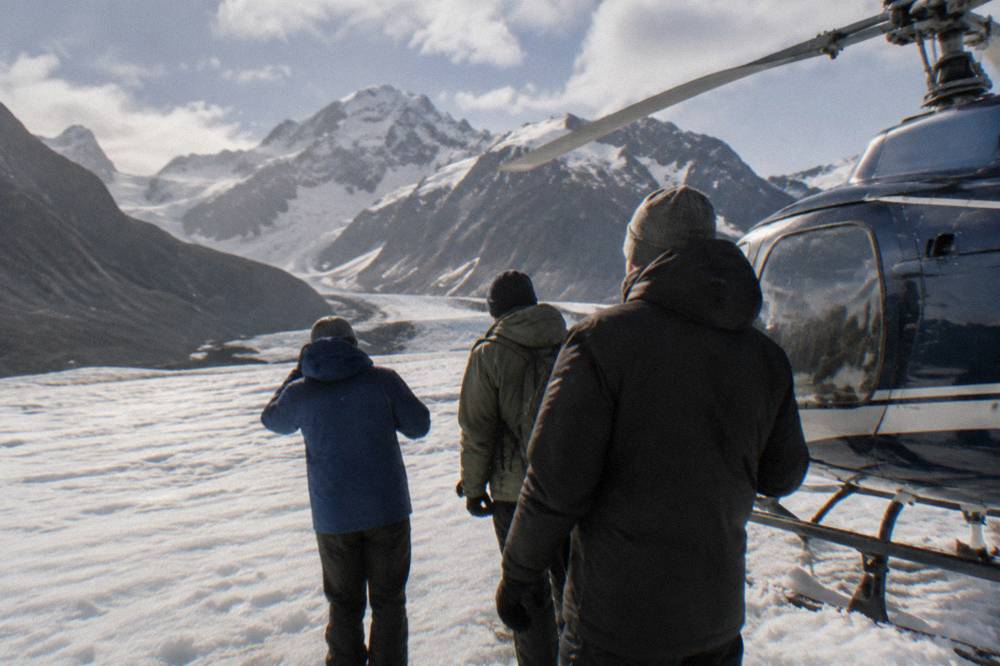
Usually the opposite, according to how the landings actually work. The aircraft lands on a flat snowfield, the engine keeps running or shuts down depending on the flight, and you step a short distance from the aircraft onto level snow, with 10 to 15 minutes outside on the flights that state the figure. There is no cliff edge, no walk to a viewpoint, and no moment where the ground drops away beneath you.
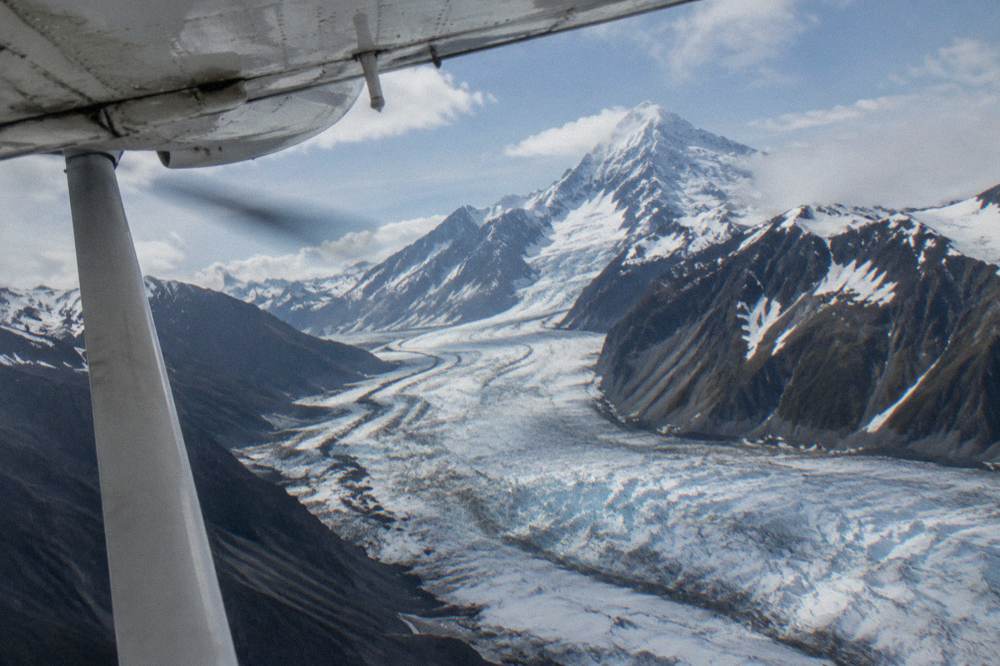
What surprises many first-time passengers is that the landing phase is the least height-adjacent part of the trip. You are on the ground, on snow, surrounded by mountains that rise around you rather than beneath you. The glacier is 23 km long and up to 3 km wide at Tasman, New Zealand's largest, so the landing zone is an expanse, not a perch. DOC lists Mount Cook Ski Planes as the concessionaire for snow landings on the Tasman Glacier, which is why so many of these flights land there.
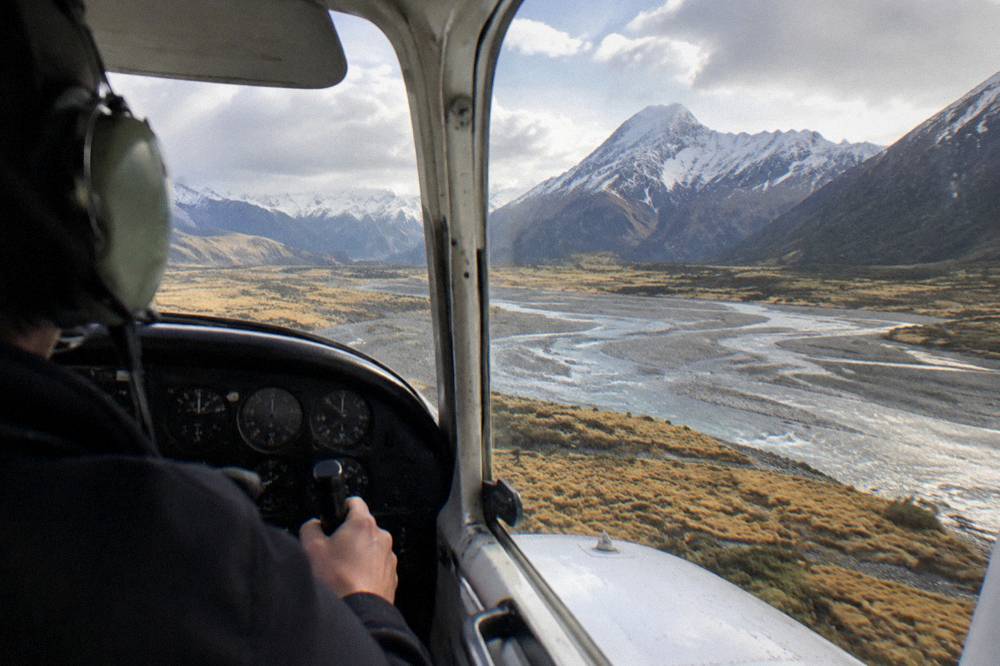
The height exposure, such as it is, happens during the flying portions, when the aircraft crosses the glacier's crevassed surface or tracks along the Hochstetter Icefall. Looking straight down through a window at ice 600 m deep near the icefall is the moment most likely to trigger a reaction in someone with a genuine fear of heights. The practical countermeasures are unglamorous and effective: ask the pilot at check-in about seating, keep your eyes on the horizon or the summit rather than straight down, and remember the flight length you chose is finite and printed on your booking.
Dressing warmly matters more than it sounds for anxiety management, because cold amplifies discomfort. Operators advise warm layers, long pants, a light sweater or jacket, sunglasses for the strong snow glare, and sturdy closed-toe shoes. Landing sites are typically 1 to 3 degrees cooler than the airport. A daypack, hat and gloves round out the list for the Tasman Glacier heli-hikes.
What If Anxiety Hits During The Flight?
Tell the crew. Every landing is weather permitting, and free cancellation up to 24 hours before the flight leaves room to change your mind. There is no walking out, but there is also no pretending. Operators describe flights seven days a week weather permitting, and when weather does force a cancellation a reschedule or refund is the usual outcome.
A few concrete tactics come up again and again from how these flights operate. First, book the morning or the first available slot of your stay rather than the last day, because alpine weather changes fast and the operator advises booking early in the stay to leave room to reschedule. A nervous flyer with a forced next-day departure and a cancelled flight is a worse scenario than the flight itself. Weather decisions can come from early morning until about 10 minutes before departure, with notice the day before when a cancellation is likely.
Second, manage the waiting. Check-in means arriving by the time given in your booking email, and minimum passenger numbers apply on most flights, which are rescheduled or combined if not met. Sitting at a small airport waiting for a weather call is where anticipation does its worst work; bring something to read and treat the wait as weather-watching rather than doom-watching. The MetService publishes a dedicated mountain forecast for the park, which is the same information pilots work from, and watching it the evening before takes some of the mystery out of the morning call.
Third, if the window is the problem, the fixed-wing overflight from Tekapo may not suit, as every passenger has a window seat. Air Safaris' Grand Traverse covers about 200 km over Aoraki / Mount Cook and Westland Tai Poutini national parks in about 50 minutes of flying, gives every passenger a window seat, and makes no mention of a snow landing, so the whole experience is enclosed from start to finish. The Tekapo version, Lake Tekapo: 50-Minute Mount Cook and Beyond Scenic Flight, is from $313 per person and rated 4.9 across 138 reviews. For more on that trade-off, see should you fly from Lake Tekapo or Mount Cook Airport.
Motion sickness is a separate condition from fear of heights but often travels with it, and it has its own article: motion sickness on Mount Cook flights. Reading that before you book can spare you a second unpleasant surprise.
Which Decisions Reduce The Fear Before You Even Board?
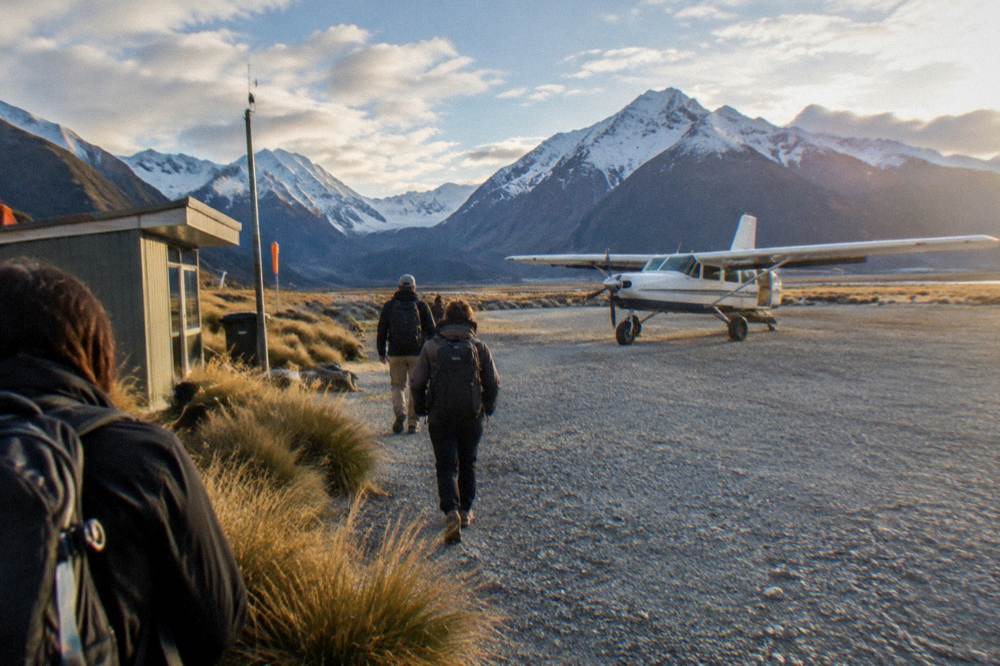
Pick a short flight, book it early in your stay, choose an aircraft type you can picture yourself in, and read the cancellation terms. Every flight covered here carries free cancellation with a full refund up to 24 hours before start, and an operator weather cancellation means a full refund or a free reschedule. Knowing the exit exists before you commit does a lot to quiet the anticipation.
The aircraft choice is more personal than most articles admit. Helicopters are a different kind of exposure, either immersion therapy or a nightmare depending on the person. Ski planes fly a more conventional flight profile and land on skis that smooth out the touchdown on snow. Neither is objectively calmer; it depends which sensations trigger you. The comparison is laid out in detail in ski plane versus helicopter at Mount Cook.
Booking with buffer time is the most underused trick. Aoraki / Mount Cook sits at the end of SH80, about 3.5 hours by road from Queenstown and 4.5 hours from Christchurch, with Twizel an hour away and Tekapo 1.5 hours, per DOC's park page. Access can be limited June to September by snow, so road conditions are worth checking with NZTA before you drive. Building two or three nights in the village, or at least two possible flight mornings, converts a weather cancellation from a disaster into a shrug. The guide to where to stay covers the practical options.
A rough decision table for the nervous flyer:
| If your fear is... | Consider... | Why |
|---|---|---|
| Looking down through windows | A flight with a glacier landing, eyes on the horizon | The landing segment gives relief and a ground-level experience |
| Enclosed spaces plus heights | Mount Cook: Scenic Helicopter Flight with Alpine Landing | Shortest exposure, from $194, most reviewed at 530 reviews |
| A long build-up of anticipation | Book day one of a multi-day stay | Cancellation leaves room to reschedule |
| Wanting no landing at all | Tekapo fixed-wing overflight (t258382) | Window seat for all, no landing, 50 minutes from $313 |
What Do Reviews From Other Passengers Say?
The ratings on these flights run high: the 25-minute helicopter alpine landing flight rates 4.7 across 530 reviews, the ski plane combo rates 4.7 across 378 reviews, and the heli hike rates 4.9 across 344 reviews. Small pools exist too, and the Glacier Highlights ski plane's 5.0 comes from 21 reviews, which is excellent but worth reading as what it is.
Across those pools, the scores alone will not tell a nervous passenger how the snow landing actually feels, so the individual reviews on each live booking page are the better read, and the landing itself always sits with the weather on the day. It also matches the mechanics of the experience, where the most height-exposed moments are viewed through a window from a seated, belted position.
The honest counterweight is that reviews are written by people who flew. Someone whose fear was severe enough that they cancelled does not write a review of a flight they never took, so the pools skew toward the reassured. Treat the ratings as evidence about the flight, not as evidence about your own nervous system. Only you know which one you are booking for.
One more figure worth knowing: the cheapest landing flight among those with 15 or more reviews is the 25-minute helicopter alpine landing at $194, and the dearest among that group is the 55-minute Mount Cook and the Glaciers helicopter flight at $538.86 from Glentanner Park. Between those poles there is a flight for most comfort levels and budgets, and reading the full Mount Cook ski plane reviews guide is a good way to see how the pools compare before committing.
What Can You Do On The Ground To Test Yourself First?
Quite a lot, because the park offers graded walks with heights you can control, and they make a useful rehearsal. The Tasman Glacier View Track is a 1.5 km return with 300 plus steps to a viewpoint over the glacier, and the Hooker Valley Track runs 10 km return over three swing bridges, with the new 189 m second bridge, which DOC calls the longest suspension bridge in New Zealand, opened in July 2026.
Neither walk is a perfect analogue for a flight, but both expose you to alpine scale on your own terms, at your own pace, with the option to stop or turn around at any moment. If the Blue Lakes viewpoint feels manageable, the view from a window will likely feel different but not categorically worse. If the swing bridges are already beyond your comfort zone, that is real information about whether a flight is the right spend, and it cost you nothing but time. DOC's Hooker Valley Track page has the full track details.
The village itself is a gentle place to wait out a weather window, with a visitor centre, a petrol station and limited cafe and restaurant options, and there is a whole set of free things to do at Mount Cook if the flight day arrives and the clouds do not cooperate. There is no entry fee for the park, though parking at White Horse Hill is paid under DOC's continuing paid parking arrangement. Practical notes on the village are gathered in the Mount Cook village guide.
If after all of this the answer for you is yes, the three ski plane flights below are the ones Mount Cook Ski Plane features most often for first-time flyers: a 45-minute glacier landing flight, the ski plane and helicopter combo where each aircraft flies one leg, and the Grand Circle, a 55-minute flight inside 1 hour 5 minutes in total, which crosses the Main Divide.
Common Questions About Mount Cook Flights And Fear Of Heights
Is A Mount Cook Scenic Flight Ok For People Afraid Of Heights?
For many people, yes. You are seated and belted in an enclosed cabin the whole time, with no exposed edges, and the shortest flight covered here lasts 25 minutes. The landings happen on flat snowfields, and every flight carries free cancellation with a full refund up to 24 hours before start, plus a refund or free reschedule if weather cancels.
Which Mount Cook Flight Is The Shortest?
The 25-minute Scenic Helicopter Flight with Alpine Landing from Mount Cook Airport, from $194 per person and rated 4.7 across 530 reviews, is the shortest flight covered here and the most reviewed. It includes an alpine landing, and the landing site has snow most of the year but not roughly December to March.
Do You Have To Get Out Of The Aircraft At The Glacier Landing?
No. Staying near the aircraft is normal, and the time on the snow is generally 10 to 15 minutes on the flights that state it. You are on a flat glacier snowfield with the crew, not on a cliff edge or a viewpoint walk.
Can You Choose Your Seat On A Mount Cook Scenic Flight?
No. Seats are assigned by the pilot for weight and balance, and passengers may be weighed at check-in. If a window is a concern for you, raise it at check-in, but the pilot's assignment is final.
What Happens If The Flight Is Cancelled For Weather?
A weather or operational cancellation by the operator means a full refund or a free reschedule. Weather decisions can come from early morning until about 10 minutes before departure. Booking early in your stay leaves room to reschedule, which the operator specifically advises.
Is A Helicopter Or A Ski Plane Better For A Nervous Flyer?
Neither is objectively calmer. Helicopters fly lower with bigger windows beside every seat; the nine-seat ski planes fly a more conventional profile. The choice depends on which sensations trigger you, and the ski plane versus helicopter comparison on this site breaks the differences down in detail.