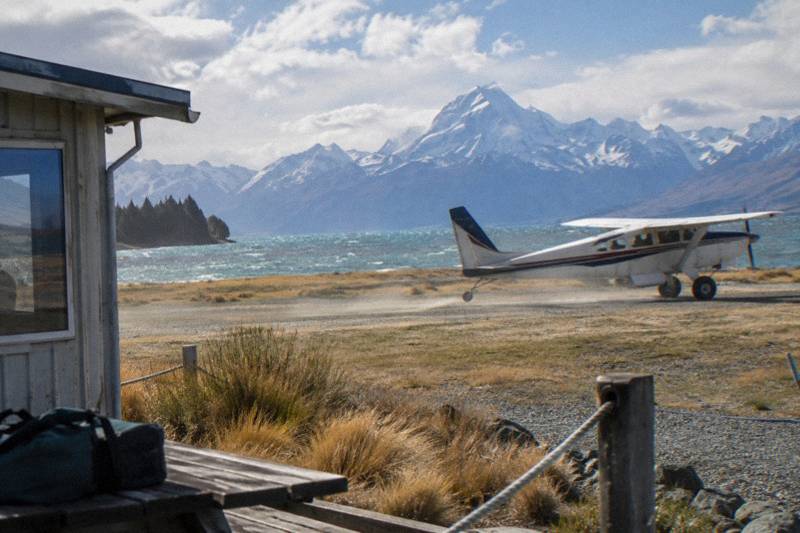
Should I Fly From Lake Tekapo Or Mount Cook Airport?
A plain comparison of scenic flights over Aoraki / Mount Cook from Lake Tekapo and from Mount Cook Airport, covering prices, landing options, durations and drive times.
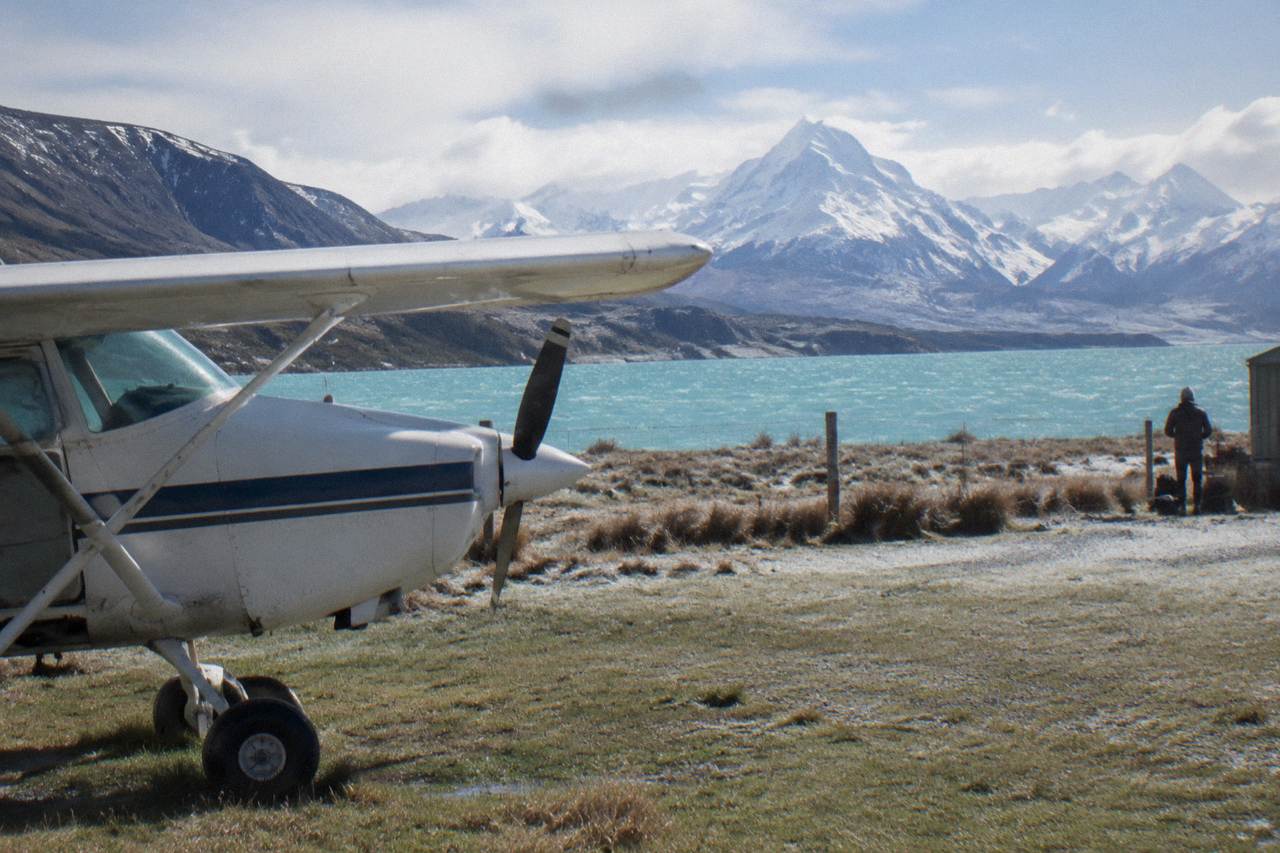
Fly from Lake Tekapo if you are staying near the lake or the Mackenzie Basin and want a long fixed-wing overflight of Aoraki / Mount Cook and the West Coast glaciers without landing, from $313.00 per person for about 50 minutes of flying. Fly from Mount Cook Airport if a snow or glacier landing is the point of the trip, with landing flights from $194.00 per person, and the village is your base on State Highway 80.
Both airfields put you in the air above the Southern Alps, but they are different products rather than the same flight sold from two counters. The Tekapo departure, run by Air Safaris from the Tekapo Aerodrome on State Highway 8, is a fixed-wing scenic flight in a larger aircraft: every passenger gets a window seat, the route covers roughly 200 kilometres across two national parks, and there is no landing anywhere. The Mount Cook Airport departures, on State Highway 80 just before the village, are dominated by ski planes and helicopters that touch down on snow, and the shortest of them costs less than the Tekapo flight. Operators here have flown from the airport since 1955, and the Department of Conservation lists the ski plane operator as the concessionaire for snow landings on the Tasman Glacier.
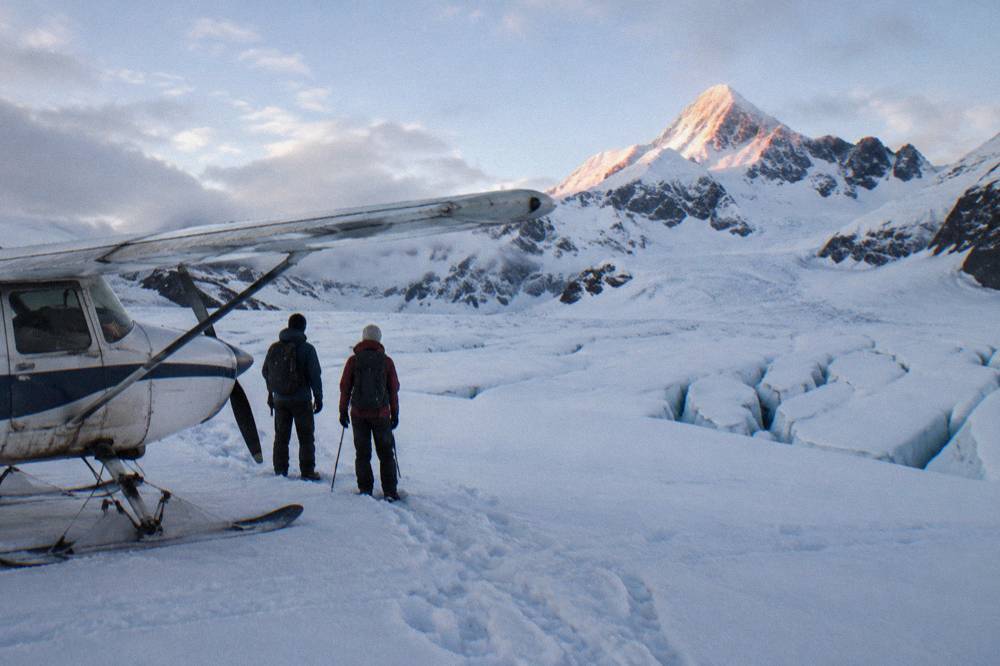
The honest answer for most travellers is that the two options are not in competition. If you are sleeping in Mount Cook village or Glentanner, flying from the local airport is the natural move: you are already there, the drive is measured in minutes rather than hours, and the landing products are the ones you came for. If your base is Tekapo, Twizel, or anywhere east of the lakes, the Air Safaris flight saves you a 1.5 hour drive each way to the village and still shows you the summit, the Tasman Glacier and, on the full route, the Franz Josef and Fox glaciers across the Main Divide. Some visitors do both in one trip: a Tekapo overflight on the way in, a glacier landing from Mount Cook Airport the next morning.
There is a third reality worth naming early. Weather rules both airfields, and alpine weather changes fast. Flights run seven days a week weather permitting, and a go or no-go decision can arrive any time from early morning until roughly ten minutes before departure. Whichever airport you choose, book early in your stay so there is room to reschedule if the cloud sits on the ranges. Every flight covered here offers free cancellation with a full refund up to 24 hours before start, so an early booking carries little risk.
What Flights Leave From Lake Tekapo?
One flight in this comparison leaves from Lake Tekapo: the 50-minute Mount Cook and Beyond Scenic Flight by Air Safaris, from $313.00 per person, rated 4.9 across 138 reviews. It is a fixed-wing overflight with a window seat for every passenger and no snow landing, departing from the Air Safaris base on State Highway 8 at Tekapo Aerodrome.
The flight the site covers from Tekapo is the Grand Traverse route under its booking-page name. Air Safaris describes it as a fixed-wing trip of about 200 kilometres over Aoraki / Mount Cook National Park and Westland Tai Poutini National Park, with about 50 minutes of flying and about an hour in total door to door. The operator's own page on the Grand Traverse confirms the two-park route and the window-seat guarantee. Because the aircraft is larger than a helicopter and every seat is by a window, it suits photographers who want a stable platform and a long stretch of scenery rather than a vertical landing.
What you give up is the landing. This flight is an overflight by design, with no snow landing and no time on the snow. Fixed-wing aircraft on this route do not put passengers down on ice. If standing on a glacier is the reason you are flying at all, no Tekapo departure will deliver it, and the Mount Cook Airport products in the next section are the ones to price instead.
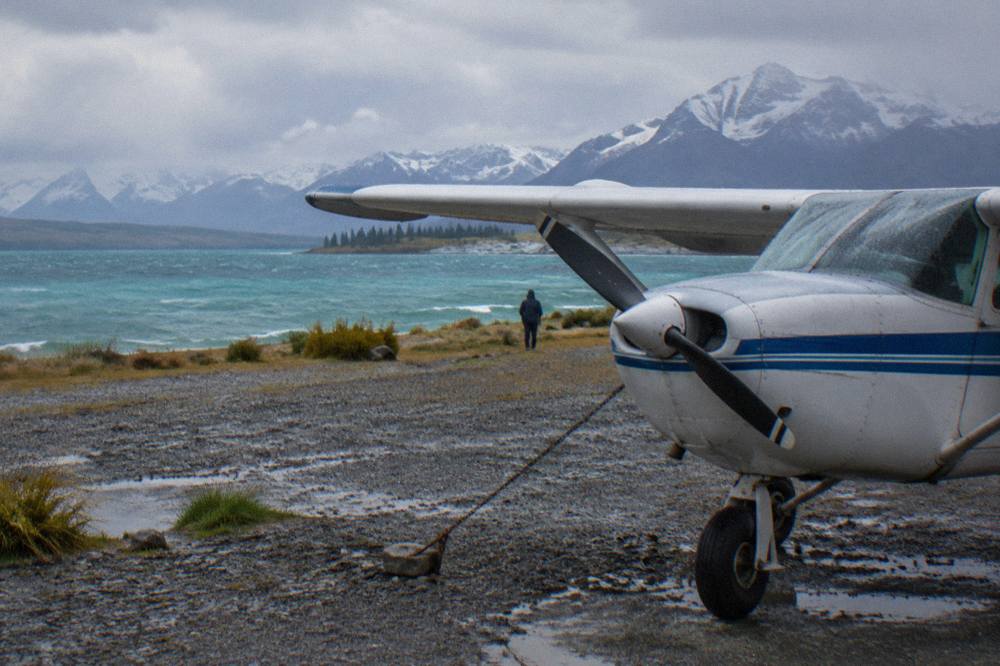
The trade works the other way too. The Tekapo flight covers more horizontal ground than the shorter Mount Cook options: the route crosses from the Mackenzie Basin over the Ben Ohau range, along the Tasman Glacier and the high peaks, then over the Main Divide to the Franz Josef and Fox glaciers before turning for the lake. In about 50 minutes you see both sides of the alps. A 25-minute helicopter hop from Mount Cook Airport, by contrast, spends its time closer to one glacier system and saves the rest of its minutes for the landing. Neither is better in the abstract; they are different shapes of the same mountain day.
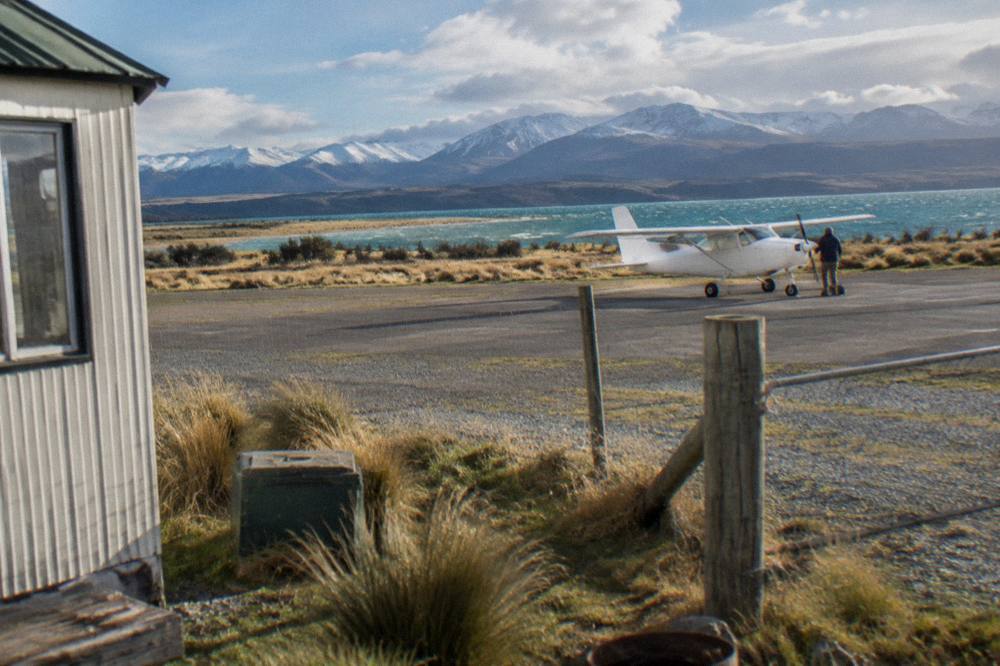
Practical details: an individual weight limit applies, so confirm the exact figure when you book; hotel pickup is not included; and free cancellation with a full refund applies up to 24 hours before start. The base is on State Highway 8 at Tekapo Aerodrome, so if you are staying in the village of Lake Tekapo you are minutes away rather than an hour and a half. That proximity is the single biggest argument for this departure: it converts a full-day Mount Cook driving outing into a one-hour aviation experience you can slot into a Mackenzie itinerary that also takes in the lake, the Church of the Good Shepherd and the Dark Sky Reserve. For a fuller treatment of the base and the area, the Mount Cook Ski Plane homepage gathers the Mount Cook Airport flights in one place, and the dedicated Lake Tekapo scenic flight guide expands on this departure.
A quick note on who this flight serves best. Travellers pairing Tekapo with a road trip toward Christchurch or Queenstown, photographers who want maximum scenery per minute, and anyone uneasy about helicopter landings all fit the fixed-wing profile well. Families with small children often find the bigger cabin and the one-hour total commitment easier than a three-hour heli-hike. What you should not do is book it expecting snow time: the words "and Beyond" in the title refer to the route, not to a stop.
What Can You Fly From Mount Cook Airport?
Mount Cook Airport on State Highway 80 is the base for the ski plane and helicopter flights with snow and glacier landings, including the most reviewed flight covered here, the 25-minute scenic helicopter flight with alpine landing at $194.00, rated 4.7 across 530 reviews, and the ski plane and helicopter combo at $277.00, rated 4.7 across 378 reviews. Most Mount Cook Airport flights here include a landing, though the 55-Minute Scenic Flight option does not mention one.
This is the airfield the village uses, sitting on SH80 just before the village itself, with free parking at the airport. The operator, Mount Cook Ski Planes and Helicopters, an INFLITE Group brand, has flown in the park since 1955 and runs Pilatus Porter ski planes with nine seats alongside helicopters seating five to seven depending on weight. Operators describe the area as the only place in the Southern Hemisphere with year-round glacier landings by ski plane, and the Department of Conservation lists them as the concessionaire for snow landings on the Tasman Glacier.
| Flight | Aircraft | Price from (USD, per person) | Duration | Landing | Rating and reviews |
|---|---|---|---|---|---|
| Scenic Helicopter Flight with Alpine Landing | Helicopter | $194.00 | 25 minutes | Alpine landing | 4.7 across 530 reviews |
| Ski Plane and Helicopter Glacier Combo Flight | Ski plane plus helicopter | $277.00 | 45 minutes | Glacier snow landing, 10 to 15 minutes on the snow | 4.7 across 378 reviews |
| 45-Minute Glacier Highlights Ski Plane Tour | Ski plane | $397.02 | 45 minutes | Glacier snow landing, 10 to 15 minutes on the snow | 5.0 across 21 reviews |
| 55-Minute Grand Circle Ski Plane | Ski plane | $453.82 | 1 hour 5 minutes total | Snow landing, 10 to 15 minutes on the snow | 5.0 across 16 reviews |
| 45-Minute Glacier Highlights Helicopter Tour | Helicopter | $397.02 | 45 minutes | Landing, 10 to 15 minutes on the snow | 4.8 across 59 reviews |
| 55-Minute Grand Circle Helicopter | Helicopter | $453.82 | 55 minutes | Landing, 10 to 15 minutes on the snow | 4.7 across 42 reviews |
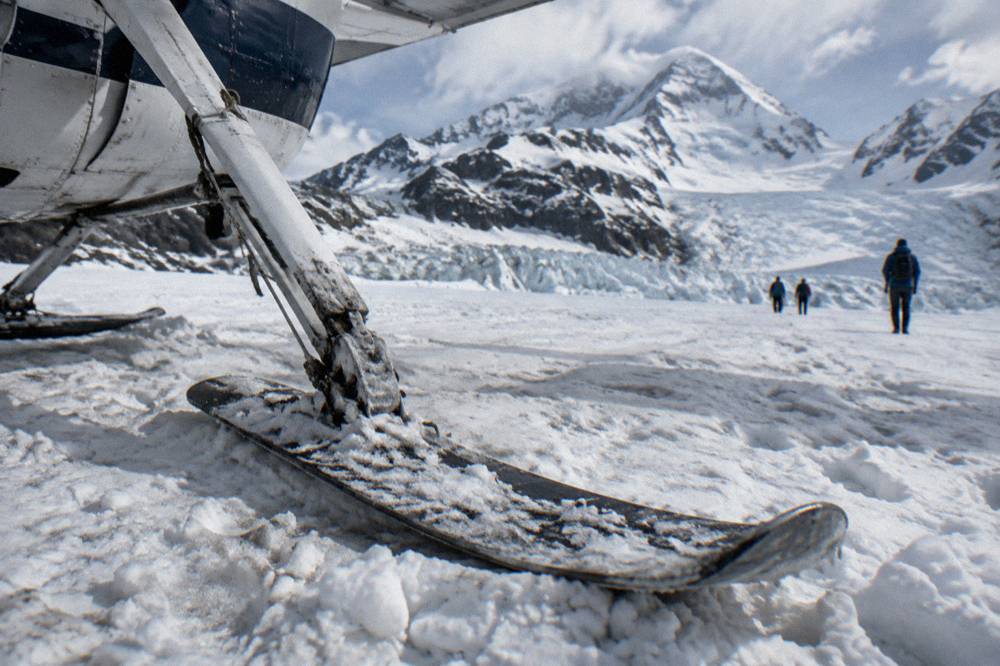
A note on what these landings mean, because the vocabulary trips people up. An alpine landing sets down on a peak or ridge snowfield; a glacier landing sets down on the glacier ice itself and gives more certainty of snow year round. The shortest flight above, the 25-minute alpine landing trip, is the cheapest way into the air from this airport and the most reviewed product in the whole comparison, but its landing site holds snow most of the year rather than all of it, with the operator noting snow is not guaranteed roughly December to March. The glacier landing flights put you on the Tasman Glacier itself, weather and the pilot's judgement permitting, and time on the snow generally runs 10 to 15 minutes inside the flight duration.
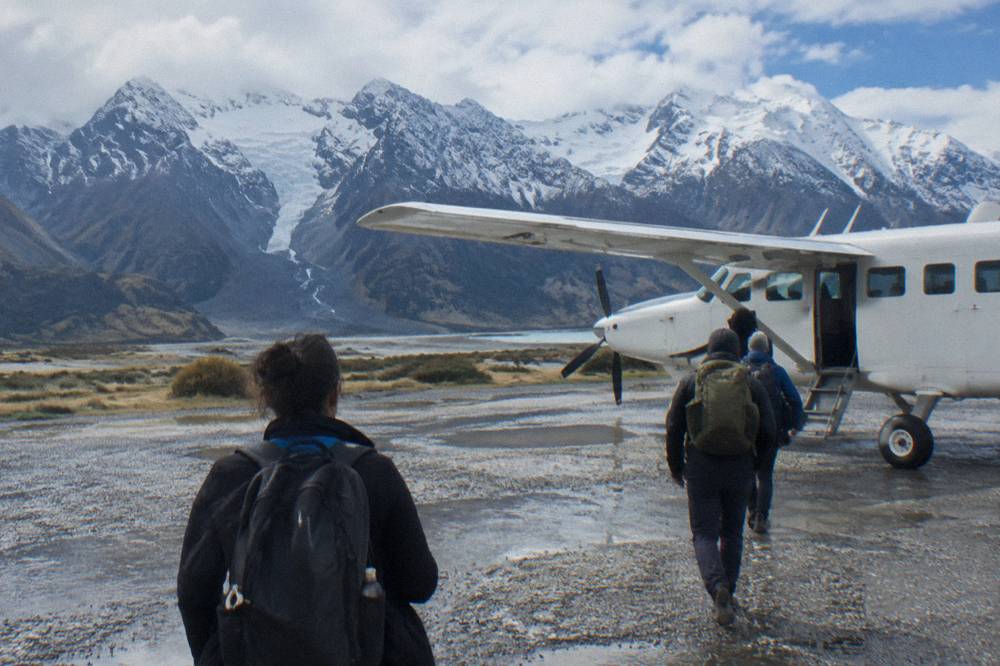
The combo flight deserves a special mention for first-time visitors. One aircraft flies part of the route and lands on the Tasman Glacier; the other flies the passengers back. Which aircraft does which is not mentioned. You experience both machines in a single 45-minute booking, which is why it carries 378 reviews, the deepest review pool of any ski plane flight at this airport. The Grand Circle routes, at 55 minutes, cross the Main Divide to the Fox and Franz Josef glaciers before landing, so they are the closest thing at this airport to the Tekapo flight's two-park coverage, plus a landing.
Practical notes from the operator's own guidance: the individual weight limit is generally 116 kg and passengers may be weighed at check-in, seats are assigned by the pilot for weight and balance rather than chosen, and transfers are not included, though limited pre-booked pick-ups from village accommodation may be available on request, so ask the operator. Children are welcome at all ages, and an infant on a lap still needs a charged seat. The deeper guide to Mount Cook Airport scenic flights walks through each route in turn.
How Do The Prices Compare At Each Departure Point?
The Tekapo fixed-wing flight costs from $313.00 per person for about 50 minutes. Mount Cook Airport flights run from $194.00 for a 25-minute helicopter alpine landing to $538.86 for a 55-minute helicopter route, with the landing combo at $277.00. On a dollars-per-minute basis the Tekapo flight and the short Mount Cook landing flight are close; the real difference is what the minutes contain.
Compare like with like and the picture sharpens. The $194.00 helicopter flight gives you 25 minutes including a landing; the $313.00 Tekapo flight gives you about 50 minutes of continuous flying across two national parks and no landing. Roughly speaking, both sit at similar published from-prices. The 45-minute Mount Cook routes at $397.02 and the 55-minute Grand Circle at $453.82 cost more, but they deliver the glacier landing, weather permitting, plus the Main Divide crossing on the Grand Circle. Among flights with 15 or more reviews, the cheapest landing flight covered here is the Mount Cook 25-minute helicopter trip at $194.00 across 530 reviews, and the dearest is the Mount Cook and The Glaciers 55-minute helicopter flight at $538.86 across 142 reviews.
| Departure | Cheapest flight covered | Longest flight covered | Landing available |
|---|---|---|---|
| Lake Tekapo (Tekapo Aerodrome, SH8) | $313.00, 50 minutes, 4.9 across 138 reviews | Same flight, about 200 km route | No, overflight only |
| Mount Cook Airport (SH80) | $194.00, 25 minutes, 4.7 across 530 reviews | $538.86, 55 minutes, 4.7 across 142 reviews | Yes, on most flights covered |
| Glentanner Park (SH80, The Helicopter Line) | $346.62, 35 minutes, 4.2 across 27 reviews | $538.86, 55 minutes, 4.7 across 142 reviews | Yes, on most flights covered |
One trap in the numbers: a headline price is not the whole cost of the day. Flying from Tekapo when you are staying in Mount Cook village means 1.5 hours of driving each way per the operator's own drive-time guidance, so a "cheaper" day can quietly absorb three hours of holiday. Flying from Mount Cook Airport when you are based in Tekapo does the same in reverse. Price the flight, then price the drive, then decide.
How Long Does It Take To Reach Each Departure Point?
The operator's drive-time guidance puts Tekapo 1.5 hours from Mount Cook Airport, Twizel 1 hour, and Queenstown or Wanaka 3.5 hours. If you are staying in Mount Cook village, the airport is on State Highway 80 just before the village; if you are staying in Tekapo, the aerodrome is on State Highway 8 beside the lake, minutes from the township.
This is where the decision usually resolves itself, because geography decides it before price does. Nobody drives from Tekapo to Mount Cook Airport to save money; they do it for the ski plane flights with glacier landings that run from that base. Equally, nobody staying in the Mackenzie Basin drives to the village for an overflight when the same mountains come to them from the local aerodrome in a bigger aircraft with a guaranteed window seat.
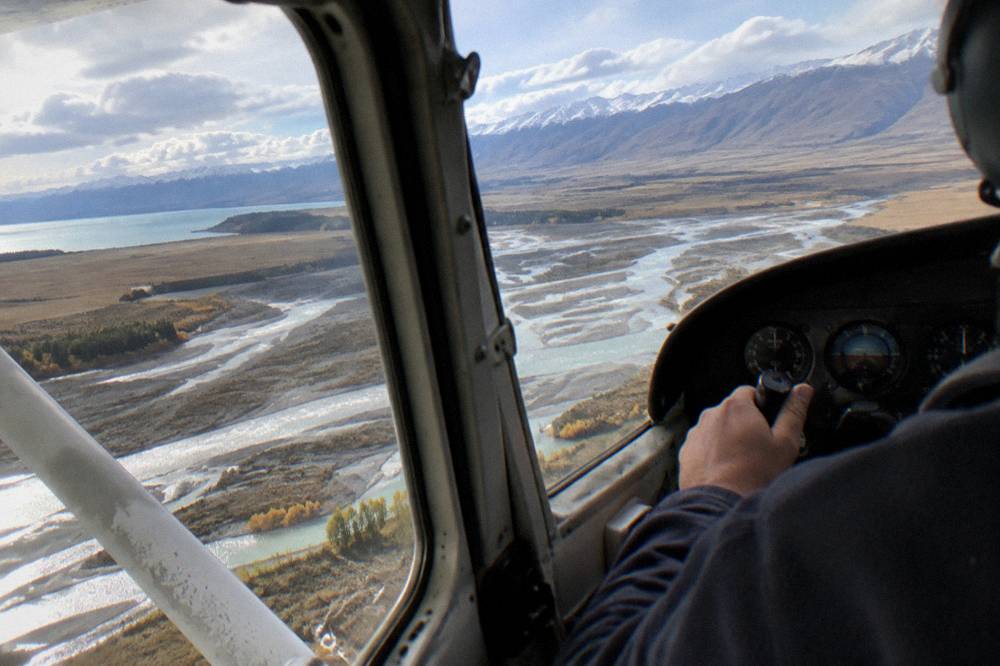
Winter adds a caveat. Access along State Highway 80 can be limited from June to September by snow, so check conditions with NZTA's highway conditions page before committing to the drive, and the same alpine weather that closes the road can ground the flights. The village itself is small, with a visitor centre, a petrol station and limited cafe and restaurant options, which is worth knowing if your flight plan involves killing an afternoon there. Full context on the area is in the Mount Cook village guide.
A pattern that works for many itineraries: sleep one night in Tekapo, fly the 50-minute overflight at a civilised hour, then drive the 1.5 hours to Mount Cook village, sleep there, and take a morning landing flight from the airport the next day while the weather window is fresh. It uses both airfields for what each does best and turns a single flight decision into a two-day alpine sequence with a buffer for weather. The broader Tekapo versus Mount Cook versus Queenstown comparison maps this out for other starting points.
Which Departure Point Suits A Landing On The Snow?
The Tekapo fixed-wing flight in this comparison is an overflight with no landing, and no Tekapo product covered here puts passengers on ice; for snow or glacier landings, look to the Mount Cook Airport, Glentanner and West Coast operators included on this page. If the landing is the point, the decision is already made.
This deserves its own heading because it is the one difference no amount of route planning can paper over. The ski plane and helicopter flights from State Highway 80 land on the Tasman Glacier or on alpine snowfields, with 10 to 15 minutes on the snow on the flights where the booking page states snow time. Those minutes are the memory most travellers report keeping: standing on New Zealand's longest glacier, 23 kilometres of ice up to 3 kilometres wide and roughly 600 metres deep near the Hochstetter Icefall, in sunglasses and layers while the aircraft idles on its skis or skids.
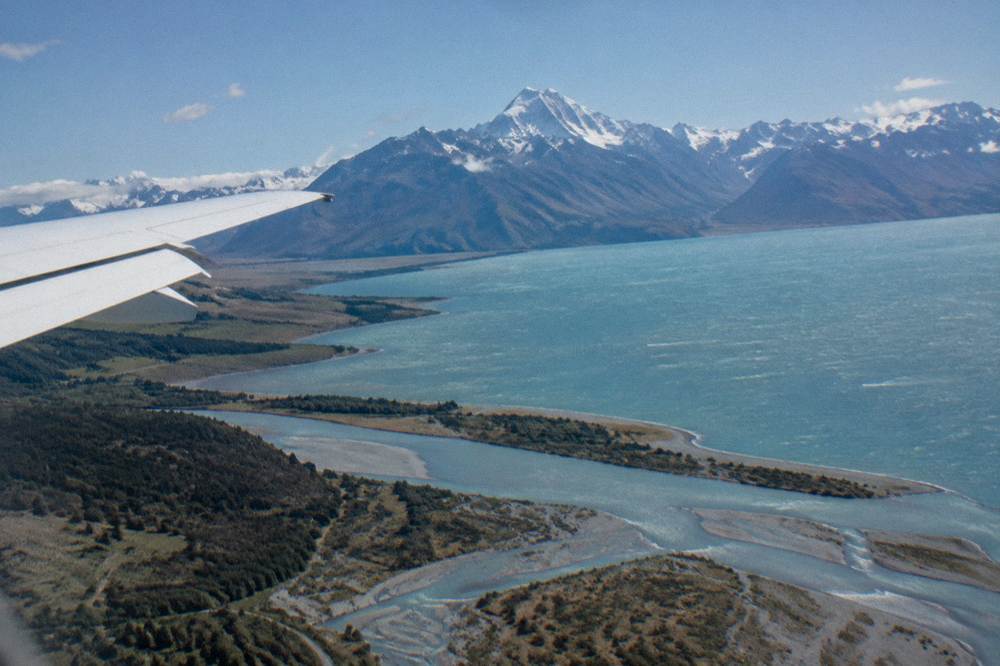
Two honest qualifiers. First, even on a landing flight the touchdown depends on weather and the pilot's judgement on the day; no operator promises it in advance, and the exact site is confirmed on the day. Second, the alpine landing flights, including the cheapest helicopter trip, use a site that holds snow most of the year but not reliably through the warmer months, so a summer booking on that product may put you on rock or tussock rather than white ice. Glacier landings, directly on the Tasman, give more certainty of snow year round. The site's dedicated glacier landing at Mount Cook guide covers this distinction in depth.
From Tekapo, the nearest thing to snow time is not a landing at all but a change of plan: head north to Mount Cook, where operators including Glacier Helicopters and Heliworks fly landing routes, or book one of the longer West Coast products. Two Queenstown day combinations in this comparison do exactly that, pairing road travel with helicopter time, and they suit travellers who never reach the Mackenzie at all. The Mount Cook Small Group Tour and Heli Hike combo, 12 hours door to door from The Station on Shotover Street, rated 4.8 across 68 reviews and from $687.27 per person, includes two helicopter flights and a heli-hike on the glacier. It is a bigger commitment than either single airfield flight, but it answers the landing question from the far side of the country.
Does The Departure Point Change The Views?
Yes. From Tekapo the flight covers a roughly 200 kilometre route over both Aoraki/Mount Cook and Westland Tai Poutini national parks, with a window seat for every passenger; from Mount Cook Airport the routes concentrate on the Tasman Glacier and the high peaks close up, with the Grand Circle routes also crossing the divide. Neither viewpoint sees the mountain the same way.
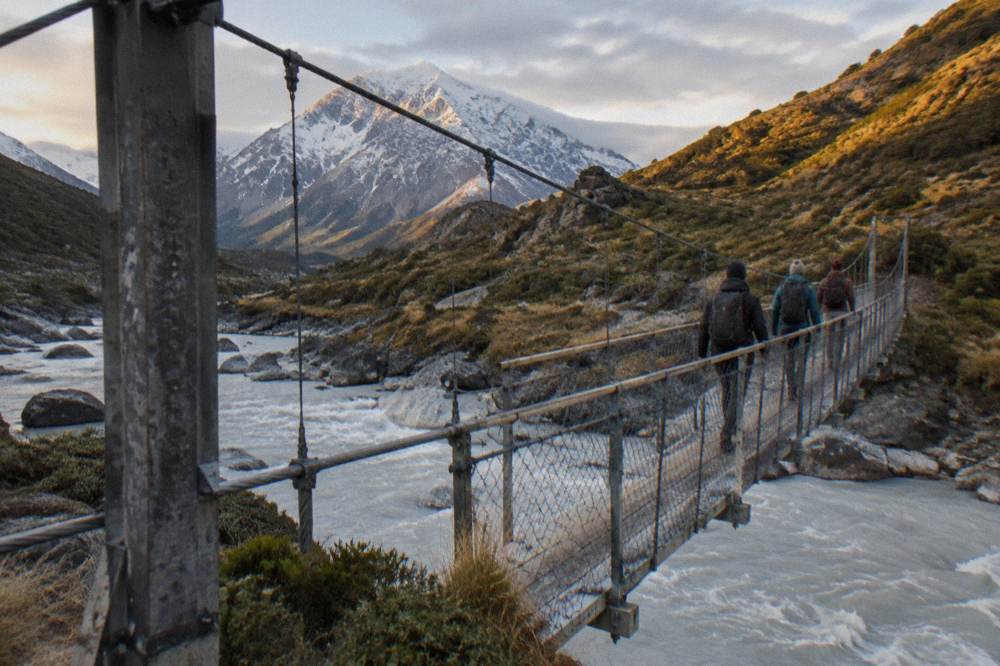
The Tekapo flight is the wide shot. You fly about 200 km over Aoraki/Mount Cook and Westland Tai Poutini national parks, with Aoraki / Mount Cook, at 3,724 metres the country's tallest peak, arriving framed by its neighbours. Nineteen peaks in the park top 3,000 metres and glaciers cover about 40 percent of it, and from a fixed-wing window at cruising height the scale reads as geography: two whole national parks, the divide, the western glaciers, then the lake again. Every passenger has a window, and the aircraft's stability suits long lens work.
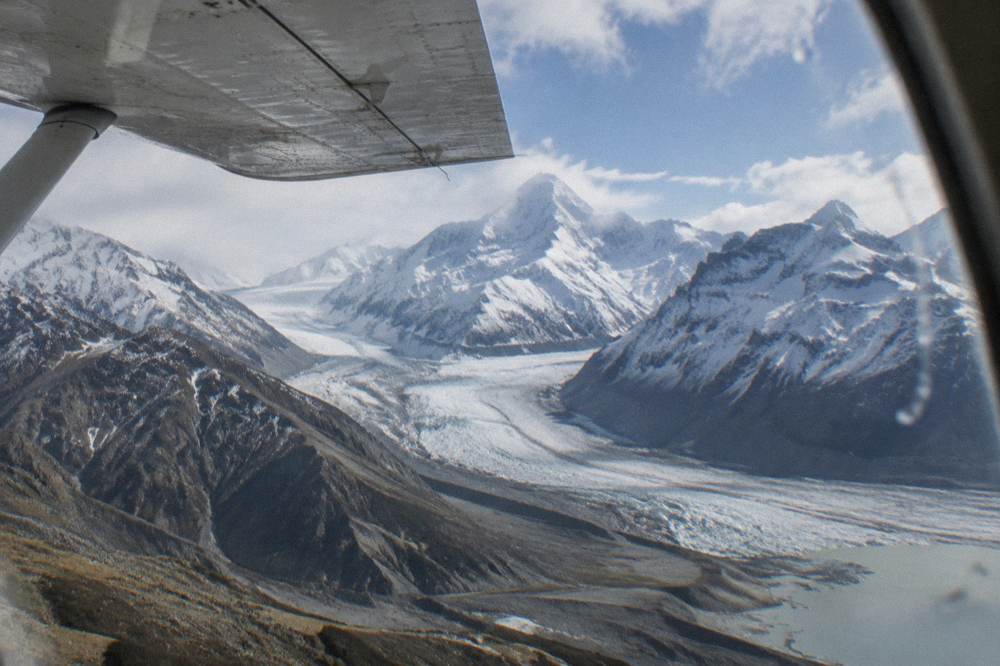
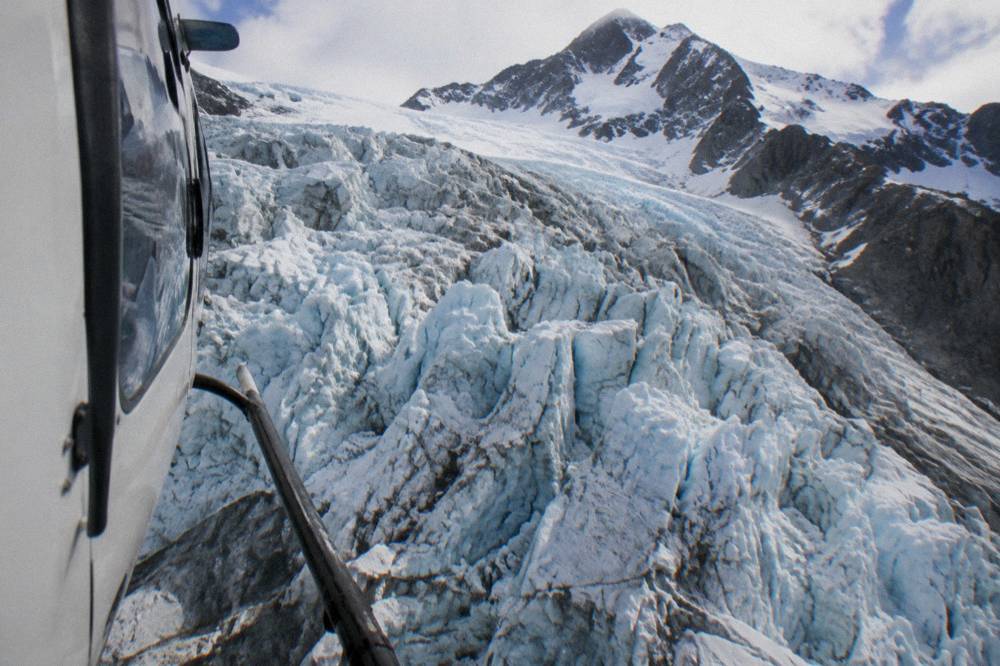
The Mount Cook Airport flights are the close-up and the walk-on part. Helicopters and ski planes fly lower and slower over the Tasman, the Hochstetter Icefall and the east faces, then land. On the snow, the view reverses: you are inside the photograph, looking up at ice walls and the peaks you were just circling. The Grand Circle routes narrow the gap between the two airfields by crossing to the Fox and Franz Josef glaciers, though with 10 to 15 minutes on the snow rather than the Tekapo flight's continuous 50 minutes of sightseeing. Photographers weighing window seats, aircraft type and light will find the detailed breakdown in the site's ski plane or helicopter comparison for photos useful; the short version is that fixed-wing windows favour landscapes and helicopter cabins favour immediacy.
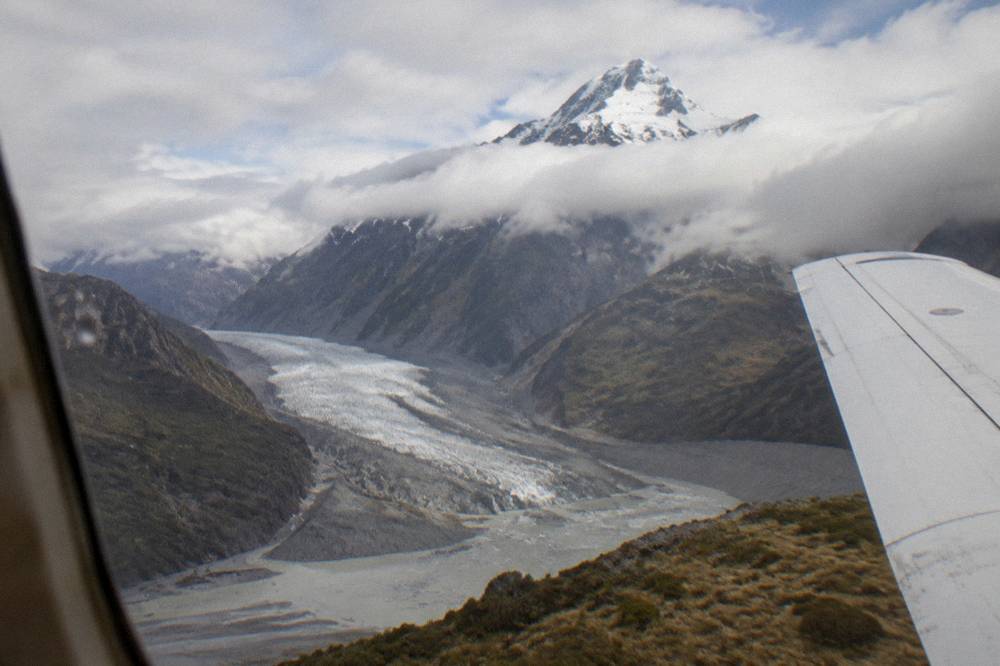
Weather reframes all of it, whichever field you choose. The MetService's Aoraki / Mount Cook mountain forecast is the reference local pilots and trampers both watch, and the Department of Conservation's Aoraki / Mount Cook National Park page is the authoritative source on the park itself. Cloud on the summit is common and no view of the top is promised from either airport; the operators' advice to book early in your stay exists precisely so a cloudy morning can become a clear afternoon.
Which One Should You Choose?
Choose Lake Tekapo if you are based in or passing through the Mackenzie, want the longest continuous sightseeing for the money, and are content to overfly the glaciers from a guaranteed window seat. Choose Mount Cook Airport if you can sleep within reach of the village and want to land on the snow, from a $194.00 25-minute helicopter trip to a $453.82 Grand Circle that crosses the divide. Doing both is a legitimate plan, not a compromise.
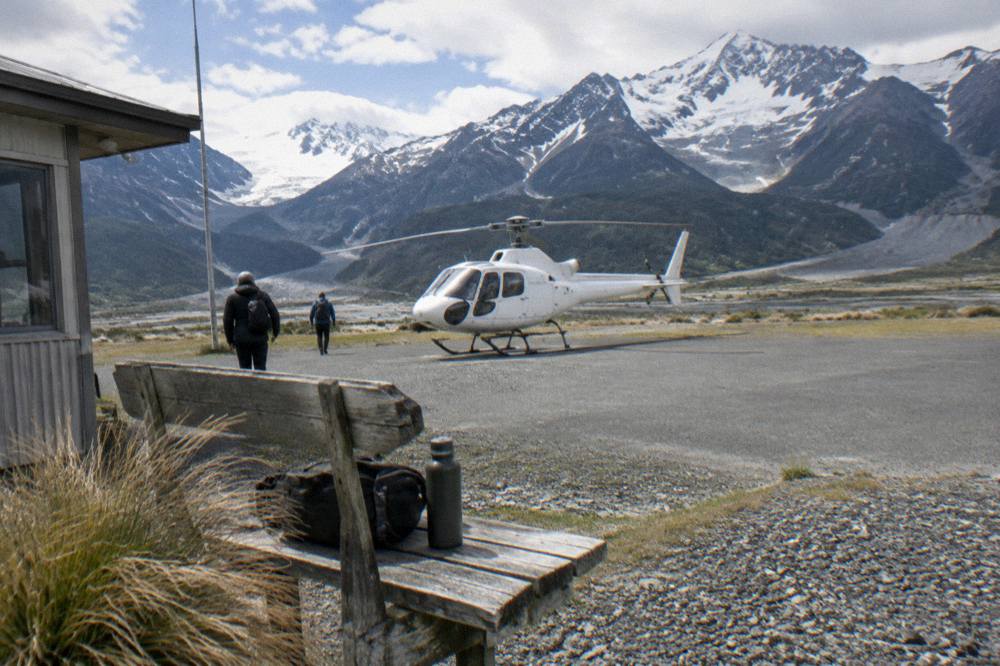
Put it as a decision: if the sentence you want to say afterwards is "you flew over both coasts of the Southern Alps", book Tekapo. If the goal is to stand on the Tasman Glacier, book Mount Cook Airport and pick a glacier landing rather than an alpine one if snow is non-negotiable. If your itinerary already includes nights in both places, book the overflight on the Tekapo day and a landing flight on the village morning, with the landing second so the weather buffer sits where the stakes are highest.
Budget travellers should note the honest floor: the cheapest landing experience covered here with a solid review pool is the $194.00 alpine landing flight across 530 reviews, and the cheapest way to see both parks is the $313.00 Tekapo flight across 138 reviews. Time-poor travellers flying out of Queenstown have the Glenorchy Air fly-explore-fly day, 8 hours, from $499.26 and rated 5.0 across 61 reviews, which lands you in Mount Cook with ground time to explore. Every product named here carries free cancellation with a full refund up to 24 hours before start, so the cost of booking early and adjusting later is low.
The final tiebreaker is temperament. Fixed-wing flying suits anyone who wants the mountains as spectacle: smooth, window-guaranteed, no vertical moves, no snow underfoot. Ski planes and helicopters suit anyone who wants the mountains as a place you arrive in and stand on, accepting the weather lottery that comes with it. The two airfields, 1.5 hours of highway apart, sell those two different dreams, and most people know within a sentence which one is theirs.
Common Questions About Tekapo Or Mount Cook Airport
Should I Fly From Lake Tekapo Or Mount Cook Airport?
Fly from Lake Tekapo for a 50-minute fixed-wing overflight of both national parks from $313.00 with a window seat for everyone; fly from Mount Cook Airport for snow and glacier landing flights from $194.00. The landing option only exists from the Mount Cook side, and the two-park overflight is best from Tekapo.
Can You Land On A Glacier If You Fly From Lake Tekapo?
No. The Tekapo flight covered here is a fixed-wing overflight with no landing of any kind. Glacier and snow landings are offered from Mount Cook Airport on State Highway 80 and at Glentanner Park, weather permitting and at the pilot's judgement on the day.
How Far Is Lake Tekapo From Mount Cook Airport?
The operator's drive-time guidance puts Tekapo 1.5 hours from the airport on SH80. Twizel is 1 hour away and Queenstown or Wanaka about 3.5 hours. Winter snow can limit access on SH80 between June and September, so check NZTA highway conditions before driving.
Is The Tekapo Flight Cheaper Than The Mount Cook Flights?
Not necessarily. The Tekapo flight is from $313.00 for about 50 minutes, while Mount Cook Airport flights start at $194.00 for a 25-minute helicopter alpine landing and rise to $538.86 for a 55-minute route. The cheapest landing flight with a deep review pool, 530 reviews, is the $194.00 trip from Mount Cook Airport.
Which Departure Is Better For Photographs?
The Tekapo flight guarantees a window seat and covers roughly 200 kilometres of both parks, which suits wide landscape work. The Mount Cook helicopters and ski planes fly lower and land, which suits close detail and the on-snow shot. Neither guarantees a view of the summit; cloud decides on the day.
Do Both Options Cancel For Weather?
Yes, both are weather dependent, and decisions can come as late as about 10 minutes before departure. A weather or operational cancellation by the operator means a full refund or a free reschedule, and every flight covered here carries free cancellation with a full refund up to 24 hours before start.