Tasman Glacier Ski Plane Landing: How The Snow Touchdown Works
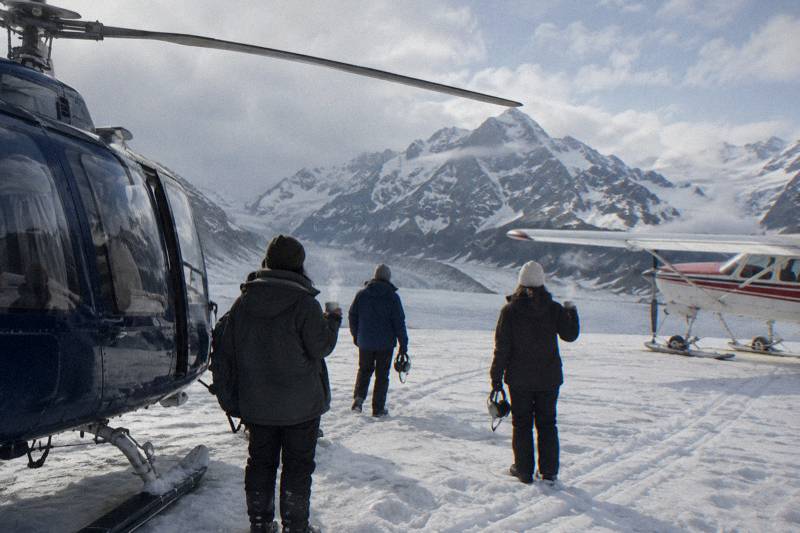
The ski plane touchdown on the Tasman Glacier is the signature flight experience at Aoraki / Mount Cook. Here is how the landing works, which flights include it, and what to expect on the snow.
Short answer
A Tasman Glacier ski plane landing is a snow landing on New Zealand's longest glacier, 23 km long, flown from Mount Cook Airport on SH80. Flights run seven days a week weather permitting, from $277 per person, with 10 to 15 minutes on the snow. Three ski plane flights carry the landing.
A ski plane touching down on the Tasman Glacier is the thing most people picture when they imagine a Mount Cook flight, and it is a real, bookable experience rather than a brochure fantasy. The glacier is New Zealand's largest and longest, 23 km long and up to 3 km wide, with ice about 600 m deep near the Hochstetter Icefall, and the Department of Conservation lists Mount Cook Ski Planes as the concessionaire for snow landings on it. Operators describe this as the only place in the Southern Hemisphere where ski planes land on a glacier year round. This page explains the mechanics of the landing in plain terms, which flights carry it, what it costs, and what can change on the day. For help deciding between wings and rotor blades, the ski plane versus helicopter comparison covers prices, snow time, and how alpine and glacier landings differ.
The short version is honest and simple. The ski plane takes off from Mount Cook Airport on SH80, flies to the glacier's upper snowfield, lands on skis, and shuts down so passengers can step out onto the snow for 10 to 15 minutes, always weather permitting. The pilot chooses the exact landing spot and can divert if conditions demand it. Three ski plane flights in the line-up carry a Tasman Glacier snow landing, from $277 per person for the most reviewed of them. A landing is never guaranteed in advance, and every operator here cancels or reschedules when the alpine weather turns. If you're wondering how often that snow touchdown actually happens, the guide to whether the ski plane lands on the snow every flight explains who makes the call and what happens when the landing cannot go ahead.
How Does A Tasman Glacier Ski Plane Landing Work?
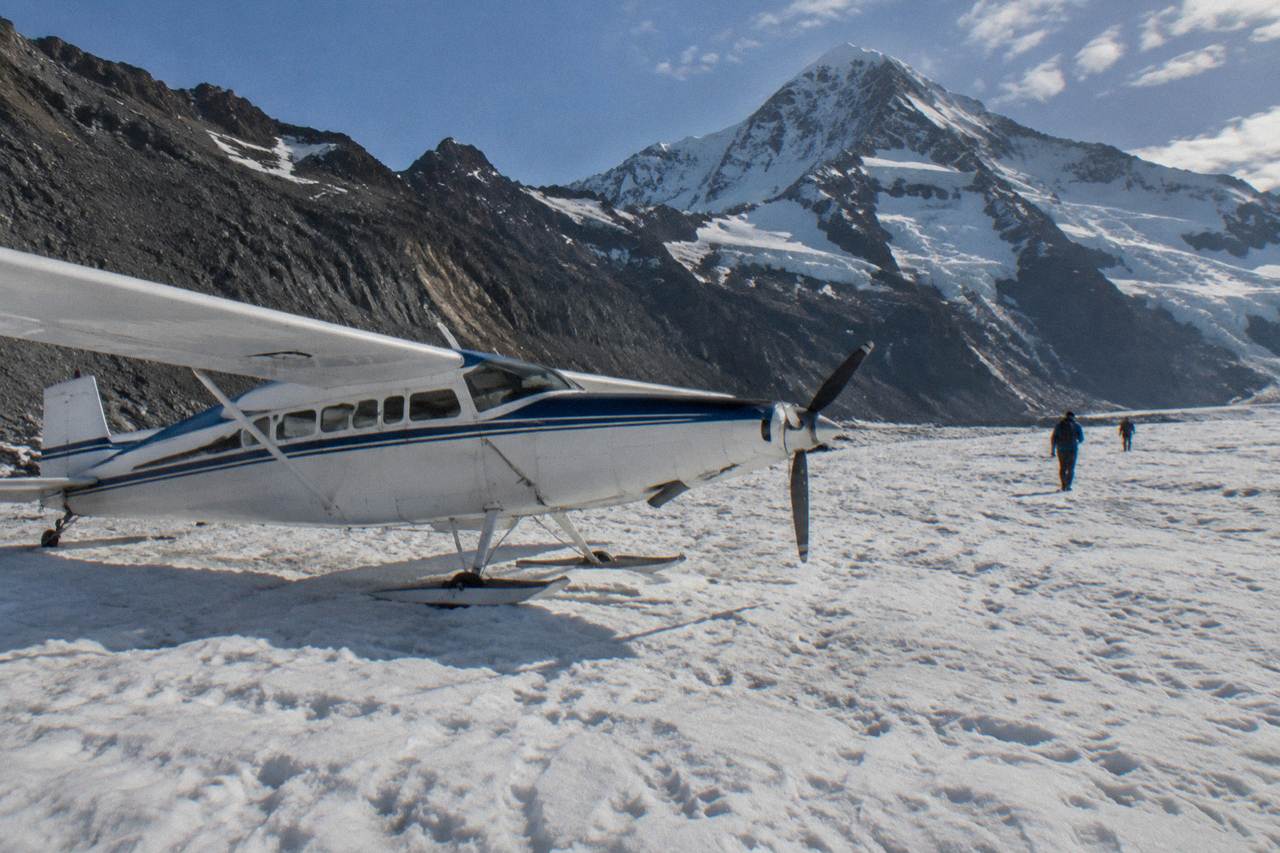
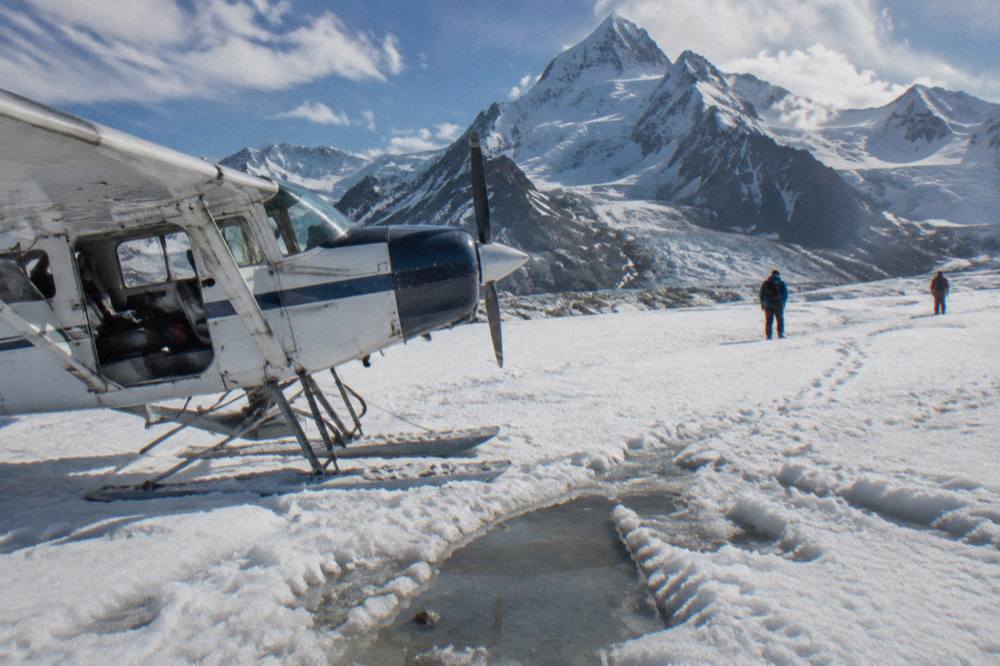
The ski plane flies from Mount Cook Airport to the upper Tasman Glacier, lands on skis on the snowfield, and the engine is shut down so passengers can stand on the snow for 10 to 15 minutes inside the total flight duration. The pilot selects the exact spot on the day and can divert if snow or cloud conditions change. The landing is offered year round, weather permitting.
The aircraft is a Pilatus Porter, a nine-seat machine fitted with skis for snow operations, and it has been flying in the park since 1955 under the Mount Cook Ski Planes operation, now part of the INFLITE group. A glacier landing is directly on the glacier ice, which the operators contrast with an alpine landing on a peak or ridge snowfield.
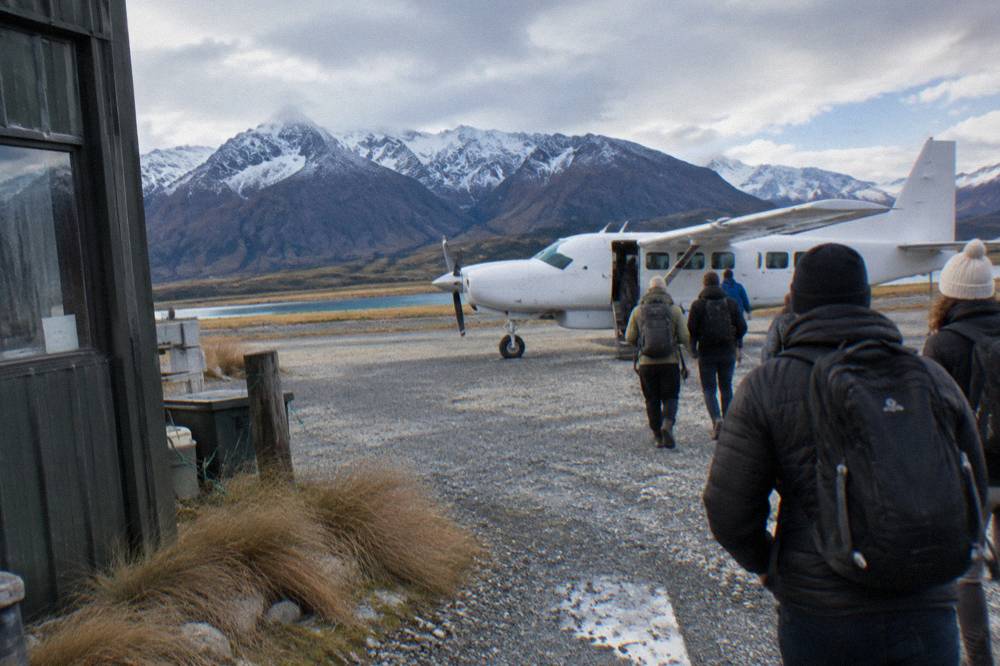
The sequence from the passenger side looks like this. You check in at Mount Cook Airport, on SH80 just before the village, arriving by the check-in time in your booking email. Passengers may be weighed at check-in, the individual weight limit is generally 116 kg, and the pilot assigns seats for weight and balance, so seats cannot be chosen. The flight then climbs toward the glacier, the pilot confirms a landing site, the touchdown happens on the skis at very low speed, and everyone steps out into snow at the top of a 23 km river of ice. Landing sites run typically 1 to 3 degrees cooler than the airport, so a jacket that felt excessive at the terminal becomes correct on the snow. More detail on the experience of the flight itself is in the guide to Mount Cook ski plane flights, which covers the aircraft, the seating and the views.
One point that deserves emphasis because it shapes every booking decision here: the pilot can divert. The exact landing site is confirmed on the day, and if snow conditions, cloud or wind make a site unsuitable, the flight becomes an overflight or lands elsewhere. The Mount Cook Ski Plane pages exist to help you compare these flights honestly, and the honest line is that no operator in the park promises a landing in advance. The flight is sold as a scenic flight with a landing, and the landing is offered weather permitting.
What Happens During The Minutes On The Snow?
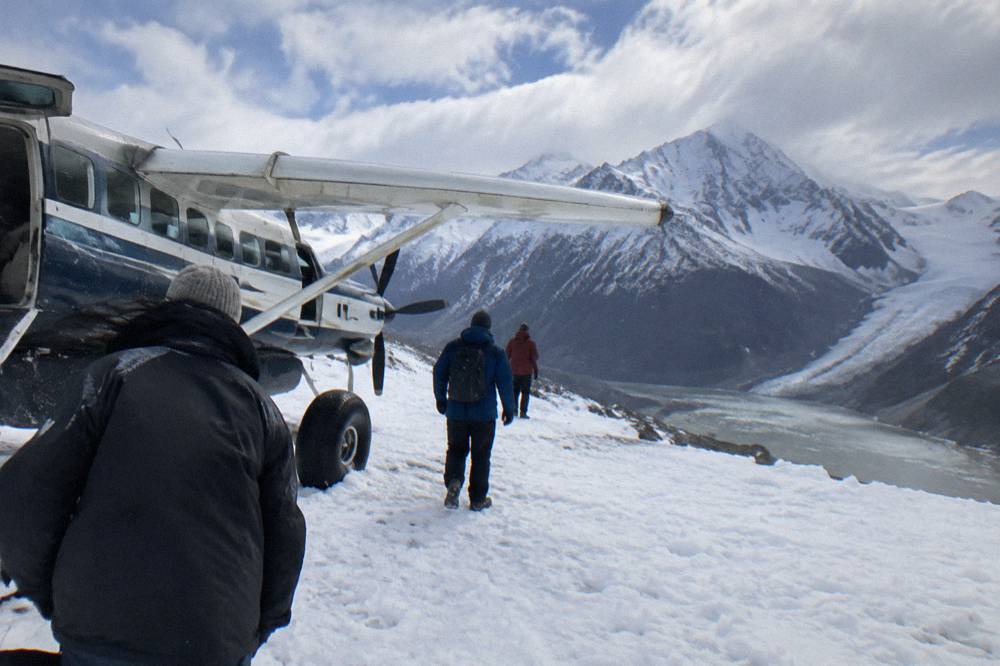
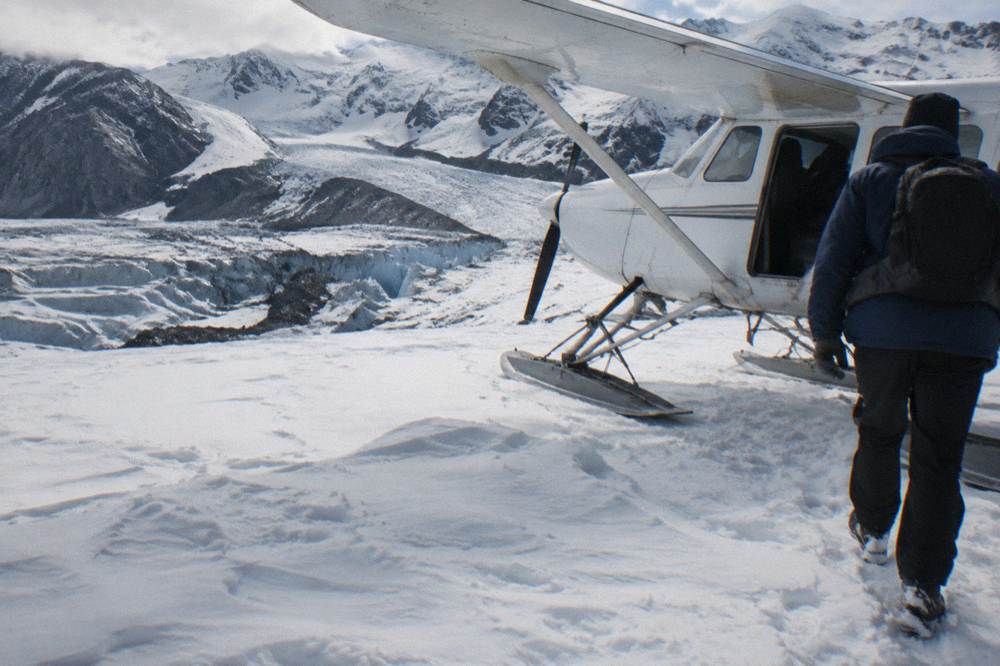
Time on the snow is generally 10 to 15 minutes, included inside the total flight duration, and the operators list those minutes for the three Mount Cook Airport ski plane flights. On the ground you can walk a short distance from the aircraft, take photographs, and stand on the ice of New Zealand's longest glacier before reboarding for the return flight. No activities are run on the snow during a scenic landing.
This is a pause, not a hike. There is no guiding, no equipment and no walking route at a scenic landing, it is a standing stop on the snowfield with the crew managing where you may walk for safety. Most passengers spend the minutes photographing: the peaks around the upper Tasman basin, the aircraft itself on its skis, and the sight of family members suddenly small against the glacier. Sunglasses matter more than people expect, the snow glare is strong, and the operators recommend warm layers, a hat, gloves and sturdy closed-toe shoes. A phone or camera is the one piece of kit worth carrying onto the Tasman snow.
The distinction between this and the guided option is worth understanding before booking. A scenic snow landing gives you minutes on the ice; a heli hike gives you up to two hours on the glacier with crampons and a guide. The heli hike is flown by helicopter rather than ski plane, costs from $552 per person on the flights covered here, and suits a different buyer, someone who wants to walk into the ice rather than stand on it. The comparison is laid out properly in the Tasman Glacier heli hike guide, and the shorter decision version is in glacier landing versus heli hike at Mount Cook. If the minutes on the snow are the part you care about most, the blog post on how long you spend on the snow answers exactly that question.
For anyone weighing the two formats, the honest trade-off is time against depth. The ski plane landing trades the hours of a guided hike for a brief, quiet stand on the ice at the top of the glacier, reached in minutes from the airport, at a from-price of $277 rather than $552. That is the whole pitch of the scenic landing, and for many travellers it is the right one: the glacier seen and touched, the summit cirque photographed, and the afternoon still free for a valley walk.
Which Mount Cook Flights Include A Glacier Landing?
Three Mount Cook Airport flights pair a ski plane with a Tasman Glacier snow landing: the 45-minute ski plane and helicopter combo from $277 with 378 reviews, the 45-minute Glacier Highlights ski plane from $397.02, and the Grand Circle ski plane from $453.82, a 55-minute flight within 1 hour 5 minutes in total. All three list 10 to 15 minutes on the snow and free cancellation up to 24 hours before start.
The three differ in aircraft and reach. The combo flight is the most reviewed ski plane product here at 378 reviews and 4.7, and it is built around two aircraft: a ski plane and a helicopter, with one landing on the glacier and the other flying the passengers back, which doubles the flying perspectives into a 45-minute package. Glacier Highlights is a single ski plane for 45 minutes, rated 5.0 across 21 reviews. The Grand Circle runs 55 minutes, crosses the Main Divide toward the Fox and Franz Josef glaciers and lands on the Tasman, rated 5.0 across 16 reviews. A fourth Mount Cook Airport option, a 55-minute scenic flight where the operator chooses helicopter or ski plane, is priced from $388 and lists 55 flight minutes, but its booking page does not state a landing, so no landing should be assumed for it.
| Flight | Aircraft | Duration | Landing | Minutes on snow | From (USD) | Reviews |
|---|---|---|---|---|---|---|
| Ski Plane and Helicopter Glacier Combo | ski plane + helicopter | 45 minutes | glacier snow landing | 10 to 15 | $277.00 | 4.7, 378 reviews |
| 45-Minute Glacier Highlights Ski Plane | ski plane | 45 minutes | glacier snow landing | 10 to 15 | $397.02 | 5.0, 21 reviews |
| 55-Minute Grand Circle Ski Plane | ski plane | 1 hour 5 minutes | glacier snow landing | 10 to 15 | $453.82 | 5.0, 16 reviews |
| 55-Minute Scenic Flight in Helicopter or Ski Plane | operator's choice | 55 minutes | Not stated | Not stated | $388.00 | 8 reviews |
Helicopters land on the glacier too, and one of them is the cheapest landing flight here with a substantial review pool. The Mount Cook scenic helicopter flight with alpine landing is a 25-minute flight from $194, rated 4.7 across 530 reviews, the most reviewed of any departure from Mount Cook Airport. It is an alpine landing rather than a glacier landing, and the difference matters: an alpine site sits on a peak or ridge snowfield, where snow is not guaranteed roughly December to March. The glacier landing carries more certainty of snow through the summer. The full comparison lives in the ski plane versus helicopter guide, and the question of whether the ski plane lands every time is answered honestly in its own post.
It is the only product here where both aircraft types appear in one booking, the ski plane and the helicopter, and it holds the largest review pool of any ski plane flight at 378 reviews. At from $277 per person it undercuts both single-aircraft ski plane tours while carrying the same landing. If the question is which single booking best answers "how does the landing work", this is the one, and you can read its details on the ski plane and helicopter combo flight page or Check availability.
Where Does The Ski Plane Land On The Tasman Glacier?
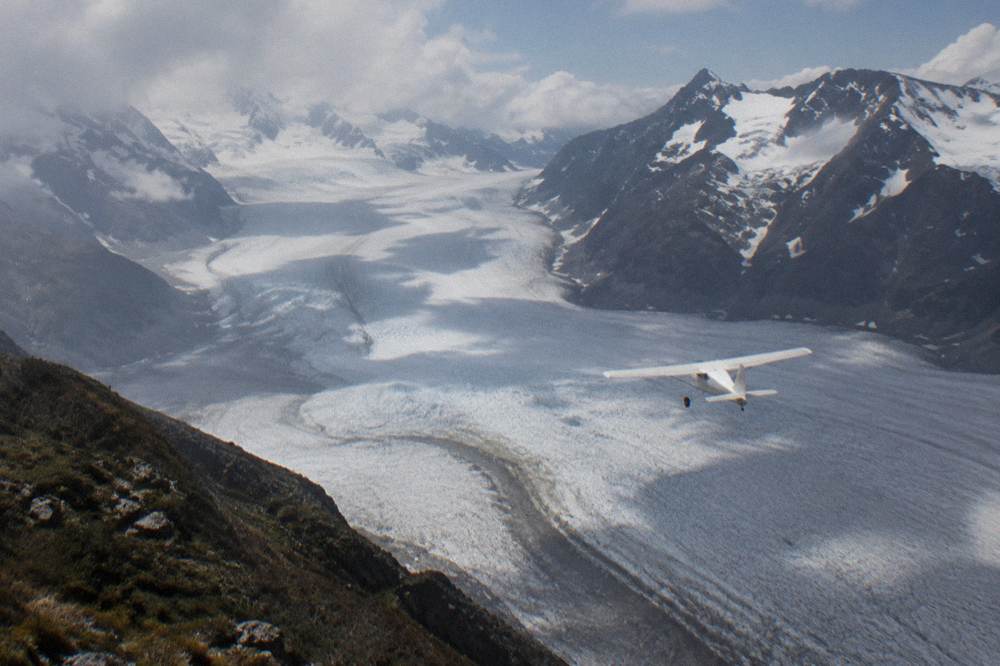
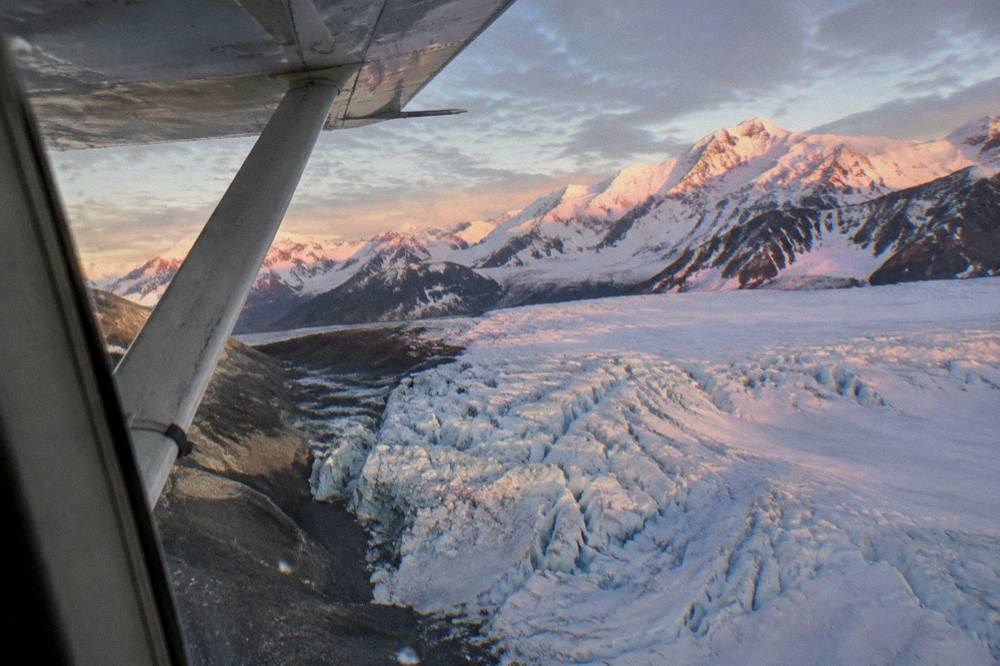
The landing happens on the glacier's upper snowfield, in the basin below the high peaks of the Main Divide, with the exact site confirmed by the pilot on the day. The Tasman Glacier runs 23 km through the park and is up to 3 km wide, and glaciers cover roughly 40% of Aoraki / Mount Cook National Park. DOC records Mount Cook Ski Planes as the snow-landing concessionaire.
The park numbers give the landing its context. Aoraki / Mount Cook stands at 3,724 m, the country's tallest peak, and 19 peaks in the park top 3,000 m. Five major valley glaciers drain the range, the Godley, Murchison, Tasman, Hooker and Mueller, and the Tasman is the largest of them. The official park page from the Department of Conservation holds the glacier figures and the concessionaire record used here.
One reason the exact spot is never printed in advance is that the glacier moves. Ice flows continuously down-valley, crevasses open and close, and seasonal snow accumulates and melts, so a site that worked in spring may be unusable by autumn. The pilot's judgement is the safety system, and the freedom to divert is what keeps a year-round landing possible on a body of ice this dynamic. The same judgement governs the helicopters that land on the West Coast glaciers, covered in the Fox Glacier helicopter flight guide, where the same rule applies: the site on the day is the only site.
How Much Does A Tasman Glacier Ski Plane Landing Cost?
The three ski plane glacier landing flights cost from $277.00, $397.02 and $453.82 per person respectively, USD prices as shown on the booking pages. The cheapest alpine-landing flight with 15 or more reviews here is the $194 helicopter option with 530 reviews, where snow is not guaranteed from December to March, while the cheapest glacier landing at that threshold is the $277 combo with 378 reviews. All flights here carry free cancellation up to 24 hours before start.
Price tracks duration and aircraft. The combo splits its 45 minutes across two machines and is the entry point. Glacier Highlights at $397.02 is the same duration in the ski plane alone, with 10 to 15 minutes on the snow listed. The Grand Circle at $453.82 buys the longest route, crossing the Main Divide toward the West Coast glaciers before landing on the Tasman. Against those, the helicopter market at Mount Cook spans $194 for a 25-minute alpine landing up to $552 for the three-hour guided heli hike, so the ski plane landing sits in the middle of the field rather than at either end.
| Flight | From price (USD) | Duration | Landing type | Reviews |
|---|---|---|---|---|
| Scenic Helicopter Flight with Alpine Landing | $194.00 | 25 minutes | alpine | 4.7, 530 reviews |
| Ski Plane and Helicopter Glacier Combo | $277.00 | 45 minutes | glacier snow | 4.7, 378 reviews |
| Glacier Highlights Ski Plane | $397.02 | 45 minutes | glacier snow | 5.0, 21 reviews |
| Grand Circle Ski Plane | $453.82 | 1 hour 5 minutes | glacier snow | 5.0, 16 reviews |
| Tasman Glacier Heli Hike | $552.00 | 3 hours | glacier, guided | 4.9, 344 reviews |
To see how these glacier landings stack up against other aerial tours around the country, the guide to the best scenic flights in New Zealand compares ski plane, helicopter, and heli hike options side by side.
The Glacier Highlights ski plane tour is the purest version of the experience for buyers who want one aircraft and one glacier story: Check availability for its 45-minute route with the same landing and 10 to 15 minutes on the snow.
Two practical cost notes finish the picture. There is no entry fee for the national park itself, though parking at White Horse Hill is paid, confirmed by DOC in a July 2026 release, while parking at Mount Cook Airport is free. And the booking-page cancellation terms on every flight covered here allow a full refund up to 24 hours before start, which is what makes an early booking low-risk. The scenic flight cost guide expands on the pricing landscape for the whole park.
What Happens If Weather Cancels The Landing?
A weather or operational cancellation by the operator means a full refund or a free reschedule, and the booking-page terms on these flights allow a full refund up to 24 hours before start. Weather decisions can come from early morning until about 10 minutes before departure, with notice the day before when a cancellation looks likely. Flights run seven days a week, weather permitting.
Alpine weather around a 3,724 m peak changes fast, and the operators here treat that as normal business rather than exception. The MetService mountain forecast for Aoraki / Mount Cook is the forecast the operators themselves watch, and it is worth reading the night before your flight. The operator advises booking early in your stay so a cancelled flight can be rescheduled into a later day, which is the single most useful planning tip on this page. Minimum passenger numbers apply on most flights, and a flight may be rescheduled or combined if they are not met.
The practical sequence, should the weather turn, is short. You are contacted, offered a reschedule or a refund, and, if you are still in the village, left with a free day. That day has good uses: the Hooker Valley Track is a 10 km return walk to a lake where icebergs speckle the water in summer, and a new 189 m second swing bridge opened on it in July 2026, which DOC calls the longest suspension bridge in New Zealand. The Tasman Glacier View Track is a 1.5 km return with 300 plus steps to a viewpoint over the glacier you would have landed on. The full detail on cancellations and rebooking is in the flight weather cancellations guide.
A diversion is the softer version of the same reality. A flight can run and still not land at the planned site, if the pilot judges the snow or wind wrong, and it becomes a scenic overflight of the glacier system instead.
What Should You Know Before You Book A Glacier Landing Flight?
Dress in warm layers with long pants, a light sweater or jacket, sunglasses and closed-toe shoes, and bring a phone or camera. The individual weight limit is generally 116 kg and passengers may be weighed at check-in. Children are welcome at all ages, an infant on a lap still needs a charged seat, and no drones or selfie sticks are allowed.
Warm layers, long pants, a light jacket and closed-toe shoes are the flight-day basics, because landing sites sit at altitude and run cooler than the airport. Snow glare makes sunglasses the item most often underestimated, and the no-jeans rule reflects that denim stays cold and wet when it meets snow. The operator's own site carries the full pre-flight information, including the aircraft descriptions and the year-round landing claim quoted on this page.
| Item | Operator guidance |
|---|---|
| Layers | 3 to 4 warm layers, warm trousers, no jeans |
| Head and hands | hat and gloves |
| Eyes | sunglasses for strong snow glare |
| Feet | sturdy closed-toe shoes |
| Extras | camera or phone, daypack for the heli hike |
| Weight | individual limit generally 116 kg, may be weighed at check-in |
| Not allowed | drones and selfie sticks |
Getting to the airport is the last moving part. The base is on SH80 just before the village, with free parking on site. Transfers are not included, though limited pre-booked pick-ups from village accommodation may be available on request, so ask the operator. There is no shuttle from Twizel or Tekapo, and the operator's own drive times are 1 hour from Twizel, 1.5 hours from Tekapo and 3.5 hours from Queenstown or Wanaka. Access along SH80 can be limited by snow between June and September, so check conditions with NZTA before a winter drive, and do not confuse Mount Cook Airport with Glentanner, a separate airfield about 15 minutes before the village that other operators use.
The Grand Circle ski plane is the one to check for the longest route, the crossing toward the West Coast glaciers before the Tasman landing: the flight itself runs 55 minutes, with 1 hour 5 minutes in total, so allow the extra time when you check availability.
For the buyer comparing the landing against the cheaper helicopter alpine option, the honest framing is this. The 25-minute helicopter flight at $194.00 is the most reviewed departure out of Mount Cook Airport at 530 reviews, a solid first flight, though its alpine landing site can sit snow-free roughly December to March. The ski plane's glacier landing carries more certainty of snow across the year, and the pilot shuts the engine down on the ice, which is the moment people book this for. Whether that difference justifies stepping up from the $194.00 helicopter fare to the $277.00 combo is the entire decision, and it is one only your calendar and your budget can settle.
Common Questions About Tasman Glacier Ski Plane Landings
Does The Ski Plane Actually Land On The Tasman Glacier?
Yes, weather permitting. The three Mount Cook Airport ski plane flights all include a Tasman Glacier snow landing with 10 to 15 minutes on the snow, and the landing is offered year round. The pilot confirms the exact site on the day and can divert if conditions require it, so a landing is never promised in advance.
How Long Do You Spend On The Snow?
Generally 10 to 15 minutes, included inside the total flight duration. It is a standing stop for photos and the view, not a guided walk; the guided option with up to two hours on the ice is the separate heli hike from $552.
How Much Is A Tasman Glacier Ski Plane Landing?
The three ski plane flights with the landing cost from $277.00, $397.02 and $453.82 per person. The cheapest glacier-landing tour here with 15 or more reviews is a $194.00 helicopter flight with an alpine landing and 530 reviews.
What Happens If The Flight Is Cancelled For Weather?
A weather or operational cancellation by the operator means a full refund or a free reschedule. Booking-page terms on these flights also allow a full refund up to 24 hours before start. Decisions can come as late as about 10 minutes before departure, so booking early in your stay leaves room to rebook.
Where Does The Ski Plane Take Off From?
Mount Cook Airport on SH80, just before the village. Parking at the airport is free. Transfers are not included, though limited pre-booked village pick-ups may be available on request, so ask the operator. There is no shuttle from Twizel or Tekapo.
Is A Glacier Landing Different From An Alpine Landing?
Yes. A glacier landing is directly on the glacier ice and gives more certainty of snow all year. An alpine landing is on a peak or ridge snowfield, and the operator notes that its main alpine site has snow most of the year but not roughly December to March.