Which Side Of The Ski Plane Has The Best View Of Mount Cook?
The honest answer to which side of the ski plane has the best view of Aoraki Mount Cook, plus how pilots assign seats, what each side shows, and how to plan around it.
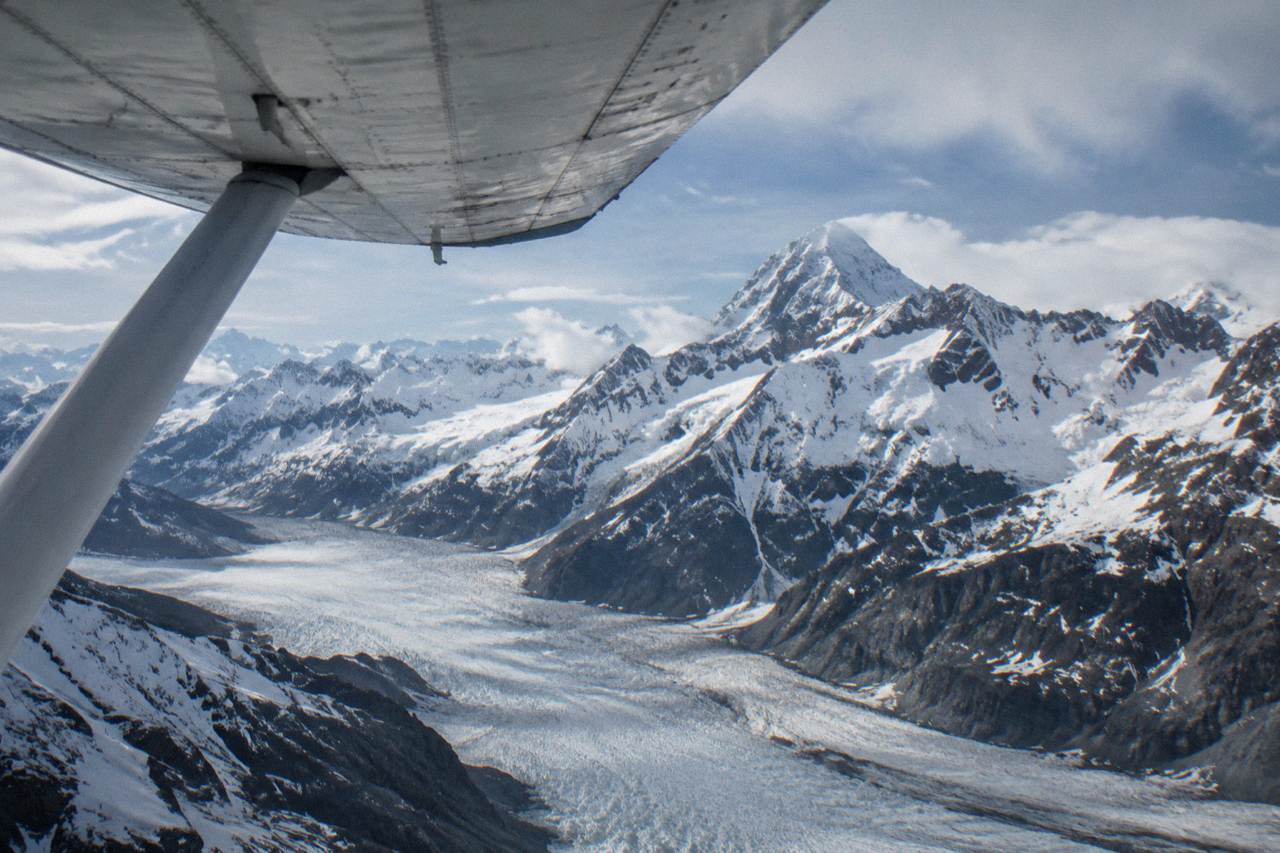
Neither side can be booked as the better view, because ski plane seats for Mount Cook flights are not chosen at all: the pilot assigns them for weight and balance, and passengers may even be weighed at check-in. In practice, popular options like the 45-minute Glacier Highlights tour from $397.02 per person circle the mountain region, so both sides of the cabin get views over the flight; the specific track on the day depends on weather and routing.
That answer frustrates photographers, so this page breaks down what actually happens in the cabin, what each side of the aircraft tends to show on the standard routes out of Mount Cook Airport, and why the side you sit on matters far less than the route, the weather and the aircraft type. The short version: stop optimising for a seat you cannot pick, and start optimising for the flight length and the day. If the aircraft type itself is still the open question, the ski plane vs helicopter comparison covers what each flight actually gets you on the snow.
The aircraft is a Pilatus Porter with nine seats, operated by a company that has been flying in the park since 1955 from Aoraki Mount Cook Airport on SH80, just before the village. With nine passengers on board, most rows are close to a window, and the cabin is small enough that views cross over people's shoulders in a way that simply does not happen on a large commercial jet. Pilots flying scenic routes also bank the aircraft toward the scenery at the pilot's discretion, which periodically swaps which side the mountain is on.
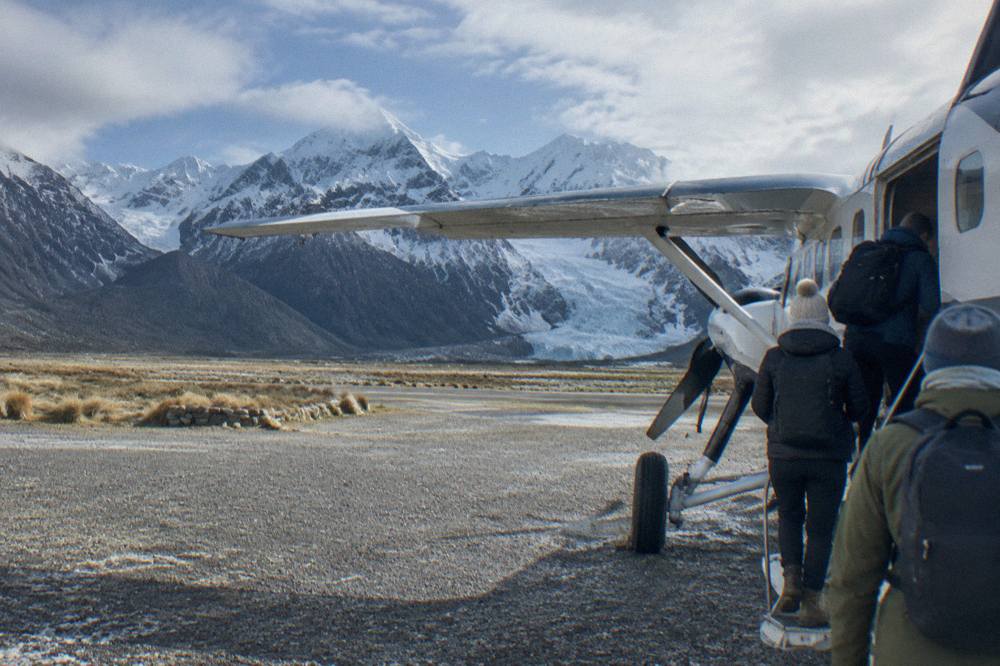
It helps to keep perspective on what is being viewed. Aoraki / Mount Cook stands 3,724 metres tall, the highest peak in New Zealand, and Tasman Glacier runs 23 km long and up to 3 km wide, with ice about 600 m deep near the Hochstetter Icefall. The object of the flight is enormous. At those scales, a nine-seat aircraft does not have a bad side in the way a 300-seat airliner does; it has a near side and a far side of a view that fills most of the sky.
For anyone comparing the specific ski plane options before worrying about seats, the short glacier landing, the combo and the long crossing are the three flight styles to weigh.
Can You Choose Your Seat On A Ski Plane Flight At Mount Cook?
No. The operator states plainly that seats cannot be chosen and that the pilot assigns them for weight and balance, and passengers may be weighed at check-in. The individual weight limit is generally 116 kg on these flights. There is no seat map, no preferred-seat fee and no way to request a side at booking, and the same rule applies to the operator's helicopter flights, which seat 5 to 7 people depending on weight.
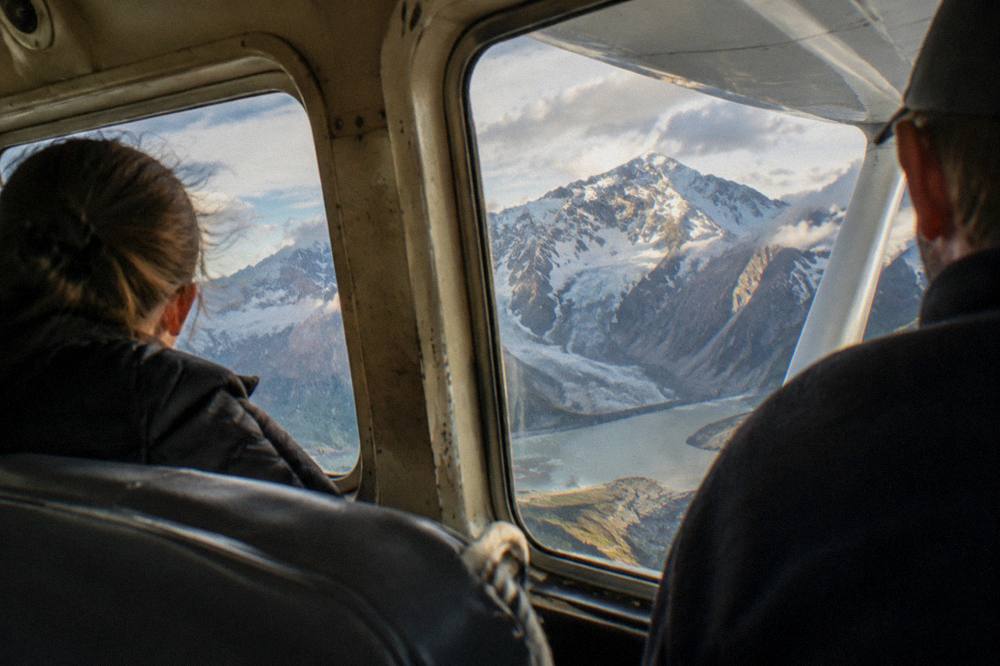
This is not a policy unique to one company, and it is worth understanding why it exists. A small aircraft loaded with people and fuel has a narrow centre-of-gravity envelope. Where each person sits changes how the aircraft trims, and on a flight that intends to land on a glacier at altitude, the pilot wants the load distributed within limits before the wheels, or rather the skis, ever touch snow. Random-seat request systems exist on airlines because a 200-passenger aircraft absorbs a badly placed passenger. A nine-seat ski plane does not.
The practical consequences are worth spelling out. Arrive at check-in expecting to be told where to sit, and treat any seat as the seat. If you are travelling as a couple or a family and want photos of each other, the person nearest the window photographs the scenery while the person beside them photographs the person photographing the scenery, which is often the better picture anyway. Seats are assigned by the pilot for weight and balance rather than chosen, though a front seat upgrade can be booked on select flights; window seating for children cannot be arranged in advance.
What you can choose, fully and in advance, is the flight itself. The 45-minute Glacier Highlights ski plane tour from $397.02 per person, rated 5.0 across 21 reviews, is the pure ski plane landing experience. The ski plane and helicopter combo at $277.00 from, rated 4.7 across 378 reviews, splits the flight across two aircraft types in 45 minutes of flying. The Grand Circle ski plane, from $453.82, is a 55-minute flight within 1 hour 5 minutes in total, carries 16 reviews so far and takes the long crossing over the Main Divide. Those three choices move the needle on the view far more than a seat assignment ever could.
One more point in the same vein: the side of the aircraft changes relative to the scenery constantly on these routes. The Grand Circle crosses to the West Coast glaciers and comes back, so each side of the cabin faces Aoraki at some stage of the flight. The honest answer here is simple: pick the longer flight, not the "better" side.
What Do You Actually See From Each Side Of The Aircraft?
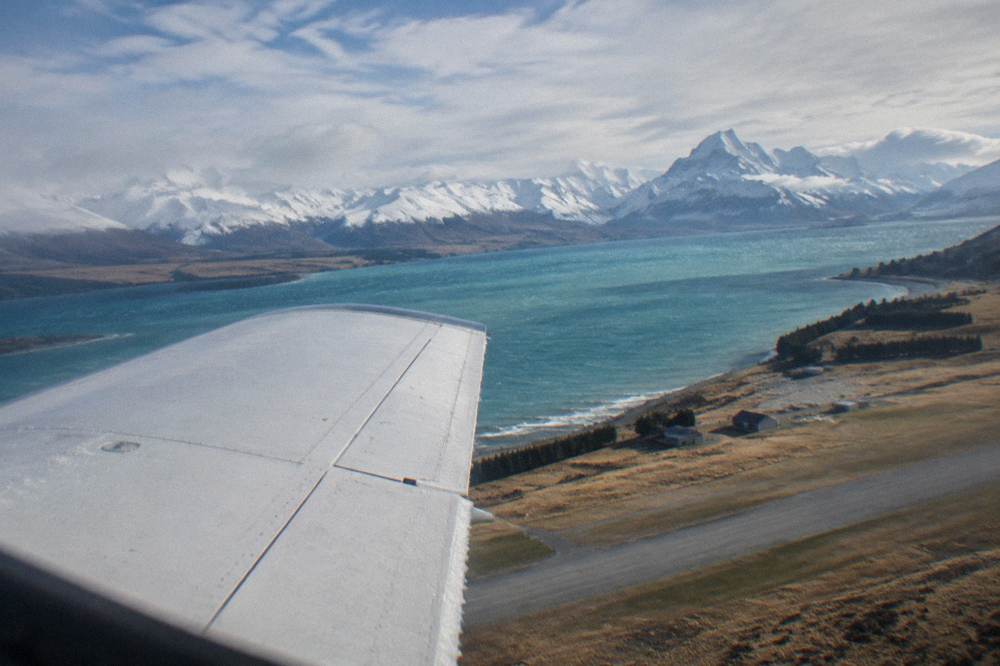
One side of the aircraft faces the sweep of the Tasman Glacier and its tributaries, while the other looks toward the high ridge line, including Aoraki itself. Because the aircraft turns repeatedly, both sides cycle through the headline scenery. On a Grand Circle flight, crossing the Main Divide swaps the view between east coast alpine terrain and the West Coast glaciers, and on landing flights everyone steps out onto the snow.
Put simply, the aircraft is not a train passing a single mountain. The Tasman is New Zealand's largest glacier, and the park holds five major valley glaciers, Godley, Murchison, Tasman, Hooker and Mueller, with glaciers covering roughly 40% of the park's area. The flight paths weave among them. A seat on the "wrong" side for one five-minute stretch is the right side for the next.
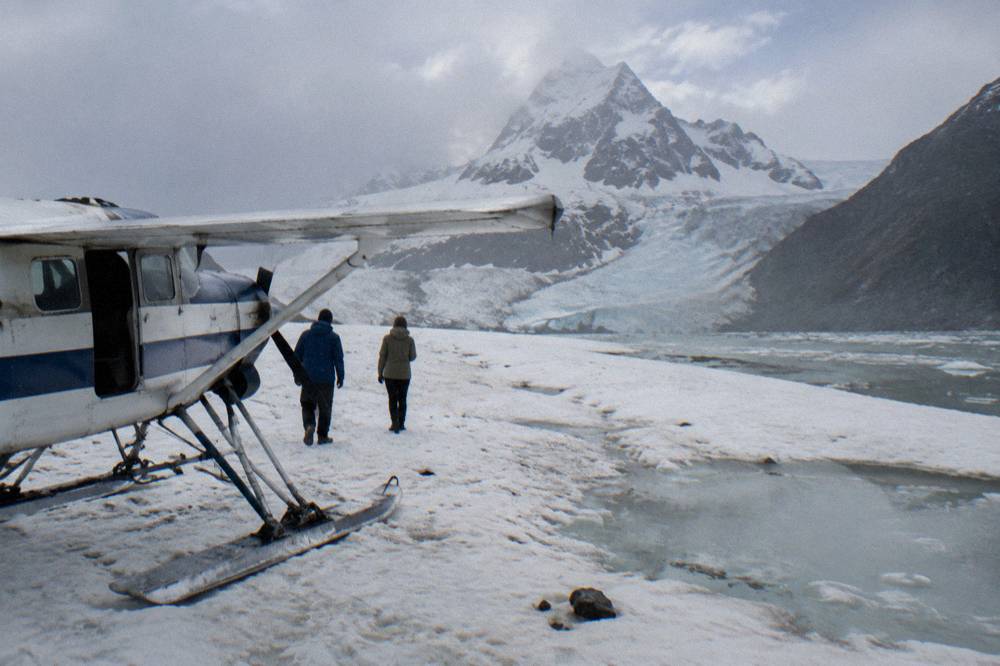
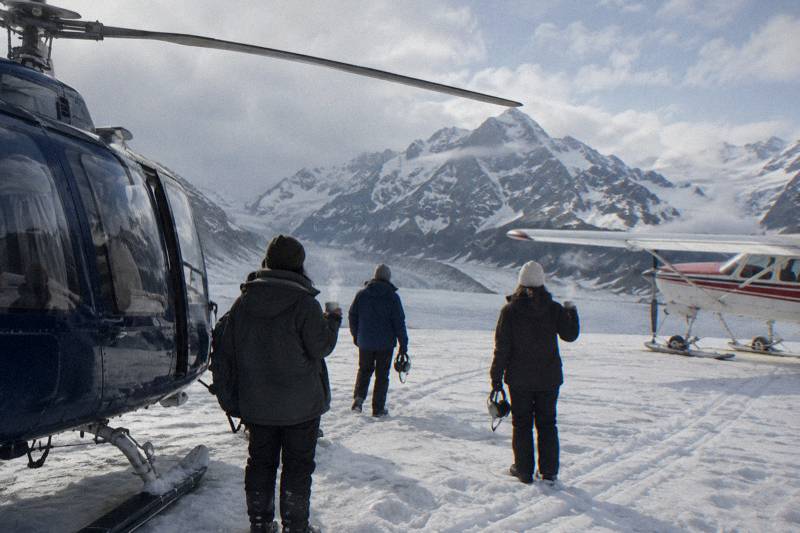
The landing is the great equaliser and deserves its own emphasis. Flights that include a glacier landing, which is most of the ski plane options here, put 10 to 15 minutes on the snow inside the total flight duration. Standing on a glacier, every passenger has the same view, unobstructed by glass, free to turn a full circle and take in Aoraki from below. When the snow stop goes ahead, it often yields better photos than any taken from the aircraft. If the goal is the definitive photograph, the landing flights are the ones that deliver it.
Weather and time of year also swamp the seat question. Alpine weather in the park changes fast, and operators make flying decisions from early morning until as late as about 10 minutes before departure. Mountain forecasts published by MetService for Aoraki / Mount Cook are what the operators themselves watch, and a flight that climbs into clear air above a layer of cloud treats both sides of the cabin to the same extraordinary scene. A clouded summit respects no seat map.
Wondering if you can cancel your Mount Cook flight before the day arrives?
The booking terms on these flights allow free cancellation with a full refund up to 24 hours before start, and an operator weather cancellation brings a full refund or a free reschedule. That makes the seat question even lower stakes: the riskiest thing about the booking is the weather, not the seating.
The helicopter alternative is worth a word here, because the seat dynamics differ. Helicopters seating 5 to 7 passengers place most people beside a window, and the front seat beside the pilot is a genuinely different experience, but it is assigned the same way, by the crew, for weight and balance. The 25-minute scenic helicopter flight with alpine landing, from $194.00 per person and rated 4.7 across 530 reviews, is one of the most reviewed flights among those covered here. It is the budget entry point for a landing flight.
Does A Window Seat For Every Passenger Exist On Any Mount Cook Flight?
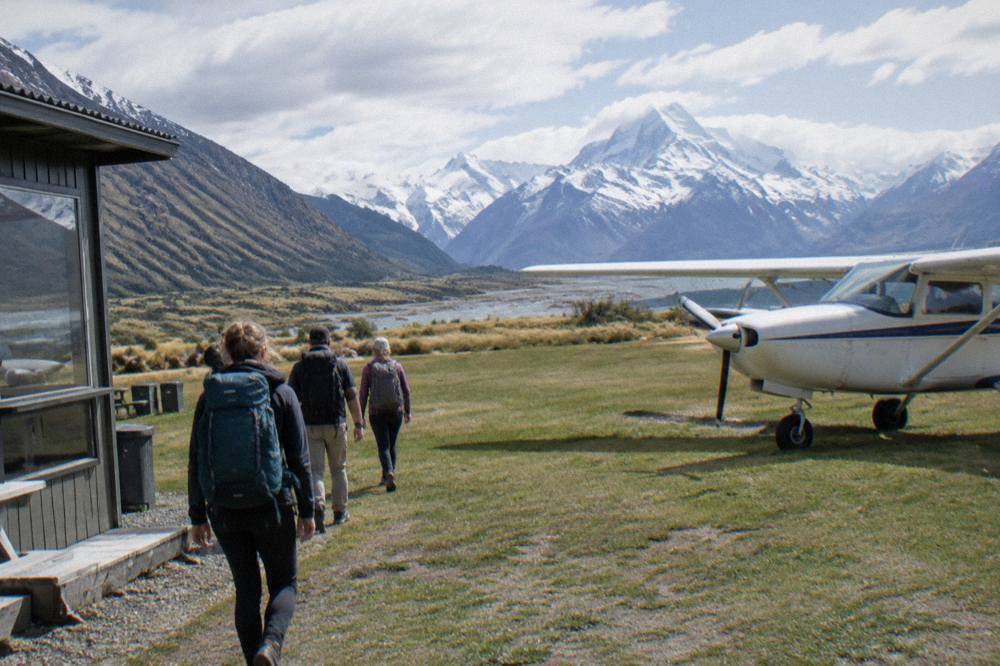
Yes, on one category of flight: the fixed-wing overflights. Air Safaris operates the Grand Traverse from Lake Tekapo with a window seat for every passenger, on a flight of about 50 minutes covering roughly 200 km over Aoraki / Mount Cook and Westland Tai Poutini national parks. The trade-off is direct: every seat is a window seat, but there is no glacier landing on that flight, it is an overflight only.
This is the one case where the seat question has a clean answer, and it comes with a real compromise. The Lake Tekapo flight, from $313.00 per person and rated 4.9 across 138 reviews, departs from Air Safaris' Tekapo base on SH8 at Tekapo Aerodrome, about 1.5 hours' drive from the Mount Cook village. Everyone gets a window, the aircraft crosses both parks, and the scenery is genuinely spectacular. But the flight does not land on snow, and the mountain is seen from a distance rather than from the surface of its own glacier. Everything else covered here is indexed on Mount Cook Ski Plane.
For readers weighing that trade-off, the comparison looks like this:
| Flight | Type | From price | Landing | Window situation | Reviews |
|---|---|---|---|---|---|
| Lake Tekapo 50-Minute Mount Cook and Beyond | Fixed wing | $313.00 | No landing, overflight | Window seat for every passenger | 4.9 across 138 |
| 45-Minute Glacier Highlights Ski Plane | Ski plane | $397.02 | Snow landing, 10 to 15 min on snow | Seats assigned by pilot | 5.0 across 21 |
| Ski Plane and Helicopter Combo | Ski plane + helicopter | $277.00 | Snow landing, 10 to 15 min on snow | Seats assigned by pilot | 4.7 across 378 |
| 55 minute Grand Circle Ski Plane | Ski plane | $453.82 | Snow landing, 10 to 15 min on snow | Seats assigned by pilot | 5.0 across 16 |
Still weighing the price tag, the honest worth-it breakdown compares what each flight actually delivers for the money.
The pattern in that table is the honest summary of the whole page. If a guaranteed window matters more than anything else, the fixed-wing overflight from Tekapo is the flight that promises it. If standing on the glacier matters more, the ski plane flights deliver that and accept the pilot's seat assignment as part of the deal. No flight here offers both.
The Tekapo option also suits travellers staying around the lake rather than in the village, and the choice of base is a bigger planning decision than the seat. The drive times published by the operators tell the story: Twizel to Mount Cook Airport is about 1 hour, Tekapo about 1.5 hours, and Queenstown or Wanaka about 3.5 hours. Parking at Mount Cook Airport is free.
What Matters More Than The Side You Sit On?
Route length, weather and the landing dominate the seat question. Longer flights such as the 55-minute Grand Circle cross the Main Divide to the West Coast glaciers and return, so both sides face headline scenery for most of the flight. Weather decides whether the summit is visible at all. And the 10 to 15 minute snow landing gives every passenger, in every seat, an unobstructed view that beats any window.
Consider what a longer flight buys. The Grand Circle routes cross from the eastern glaciers over the Main Divide toward the Fox and Franz Josef sides of the range. A short flight gives each side of the cabin one or two sustained looks at the high country; a long one loops through it. On longer ski plane routes the point softens: with more time in the air, which side you sat on tends to matter less.
Then there is timing within your stay. Operators advise booking early in the visit rather than on the last day, precisely because flights can be rescheduled when the weather turns and an early booking leaves room to fly later in the stay instead. This single piece of planning does more for the quality of the view than any seating consideration, because it converts a possible one-shot cloudy flight into a second chance in clear air.
The practical packing list matters too, and it is short: warm layers, sunglasses for the strong glare off the snow, sturdy closed-toe shoes, and a camera or phone. Landing sites run about 1 to 3 degrees cooler than the airport. Drones and selfie sticks are not permitted, which also answers a common photographer's question before it is asked: the only aerial footage you take home is through the window in front of you, whichever window that turns out to be.
Families have one extra lever. Children are welcome at all ages, and an infant on a lap still occupies a charged seat, so a family of four may find the cabin arrangement naturally puts a child beside a window. Seats cannot be chosen; the pilot assigns them on the day based on weight and balance.
How To Book A Ski Plane Flight At Mount Cook Around The Seat Question?
Book the experience you want rather than a hypothetical seat, and do it early in your stay. From the village, the 45-minute Glacier Highlights tour from $397.02 per person is the standard ski plane landing choice, the combo from $277.00 adds a helicopter leg, and the Grand Circle from $453.82 buys the crossing; all three allow free cancellation up to 24 hours before start and include a 10 to 15 minute snow landing, weather permitting.
Every one of these flights departs Mount Cook Airport on SH80, and check-in works the same way: arrive by the check-in time stated in your booking email. Transfers are not included by the operator, though limited pre-booked pick-ups from village accommodation may be available on request, so ask the operator when booking. There is no shuttle from Twizel or Tekapo, so self-driving visitors should plan the drive times above and use the free airport parking.
A note on bases, because these flights depart from more than one location. Mount Cook Airport on Mount Cook Road is the ski plane base. Glentanner Park, about 15 minutes before the village, is a separate airfield used by The Helicopter Line, and the two are regularly confused. Whichever flight you book, read the departure point on the confirmation and navigate to that one, not to the more famous one. If the trip also includes time in the village itself, the Department of Conservation's Aoraki / Mount Cook National Park pages cover the visitor centre, the walking tracks and the current parking arrangements at White Horse Hill, where parking is paid and there is no entry fee for the park itself.
For the day's conditions, the alpine forecast for the park is the single most useful page to watch before a flight morning, and the NZTA journey site covers SH80 and the alpine passes if snow is around between June and September.
The last word on the original question: bring it up with the crew at check-in, politely, once. Crews on scenic routes hear the question often, and the honest answer is straightforward: seats cannot be chosen, and the pilot assigns them for each flight. But go in expecting a no, and treat the yes as a bonus. The glacier, not the seat, is what you came for, and it sits on both sides of the aircraft.
Do Babies And Small Children Need Their Own Seats On The Flight?
There is no strict minimum age for the scenic flights: all ages are welcome, an infant riding on a lap is still allocated a seat and charged as a passenger, and the heli hikes set a minimum age of 9. Seating works the same as for anyone else, with the pilot assigning places for weight and balance. Families can ask for a child by a window, though no operator promises it.
The lap infant rule catches many families off guard, because it runs against what airline travel leads people to expect. The reason is arithmetic more than commerce. A Pilatus Porter carries nine seats, and every person on board, however small, shifts the load. The pilot needs the manifest to match what actually boards, so an infant counts toward weight and balance like anyone else and is allocated a place accordingly.
The age rules are otherwise generous. Scenic flights carry no strict minimum age, and all ages are welcome as long as children fly with an adult. Age gates do exist in the wider flying operation at Mount Cook: the Tasman Glacier heli hikes take guests from age 9, while Ski The Tasman, the glacier skiing trip, asks that participants be 10 or over. The scenic flights themselves have no equivalent cut-off.
What about the window? Groups are sometimes seated so a child ends up beside one, and asking the crew on the day costs nothing, but the final call belongs to the pilot and the load sheet. The stakes are lower than they sound anyway. In a nine-seat cabin most rows sit close to a window, views cross over shoulders easily, and pilots bank toward the scenery at their own discretion, which moves the mountain from one side of the aircraft to the other during a single flight.
Weighing at check-in applies to everybody, and the individual limit generally sits at 116 kg. Combined weights across a family can affect how the aircraft is loaded, which is a further reason a seating request made at booking cannot be treated as binding.
For families comparing options, flight length matters more than seating. The 45-Minute Glacier Highlights Ski Plane Tour runs 45 minutes from $397.02 per person and carries a 5.0 rating across 21 reviews. Cheaper, and split across two aircraft types, the ski plane and helicopter combo covers 45 minutes of flying from $277 per person, rated 4.7 across 378 reviews. When weather allows the landing, both put every passenger on the snow for 10 to 15 minutes, and from the glacier surface no child is stuck behind a shoulder. Free cancellation up to 24 hours before start, plus a full refund or free reschedule if the operator cancels on weather, takes some of the risk out of travelling with young children.
Common Questions About The Best View On A Mount Cook Flight
Which Side Of The Ski Plane Has The Best View Of Mount Cook?
Neither side can be claimed as best, and neither can be booked: the pilot assigns seats for weight and balance. The flight routes out of Mount Cook Airport turn through the scenery so both sides cycle through the peaks and glaciers, and on landing flights everyone gets 10 to 15 minutes standing on the snow with an unobstructed view.
Can I Request A Window Seat On A Mount Cook Ski Plane?
No seat can be chosen. Passengers may be weighed at check-in and the pilot assigns every seat to keep the aircraft within its weight and balance limits. You can mention a preference to the crew on the day, and they will accommodate it when the load allows, but no operator here promises a side or a window.
Is There Any Mount Cook Flight Where Every Passenger Gets A Window Seat?
Yes. The Air Safaris Grand Traverse overflight from Lake Tekapo, about 50 minutes and roughly 200 km over two national parks, offers a window seat for every passenger. It does not land on snow, so it trades the glacier landing for the guaranteed window.
Do Helicopter Flights At Mount Cook Have The Same Seat Rules?
Yes. Helicopters seating 5 to 7 passengers have their seats assigned by the crew for weight and balance, in the same way as the ski plane. The seat beside the pilot is often considered the best in the aircraft, and it is assigned, never requested at booking.
What If I Am Seated On The Side Facing Away From Aoraki?
The aircraft turns repeatedly through the glacier country, so the far side of one leg becomes the near side of the next, and the object being viewed is very large: Aoraki at 3,724 m and a Tasman Glacier 23 km long. On any flight with a landing, the snow stop gives every passenger the same full view on the ground.
Which Flight Should Photographers Choose At Mount Cook?
Pick the longer flight, not the seat side. Seats are assigned by the pilot for weight and balance anyway, and on Grand Circle routes the aircraft crosses the Main Divide in both directions, so each side of the cabin faces Aoraki at some stage. Flights with a snow landing, weather permitting, add time outside the aircraft, with no window between you and the mountains.