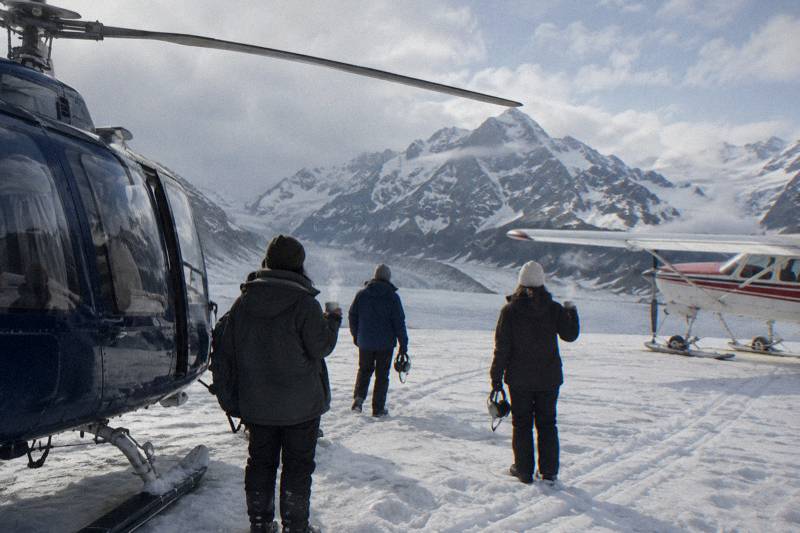
Is The Ski Plane Or The Helicopter Better For Photos At Mount Cook?
A practical comparison of ski plane and helicopter flights over Aoraki / Mount Cook for photography: windows, seating, snow time, camera rules and value.
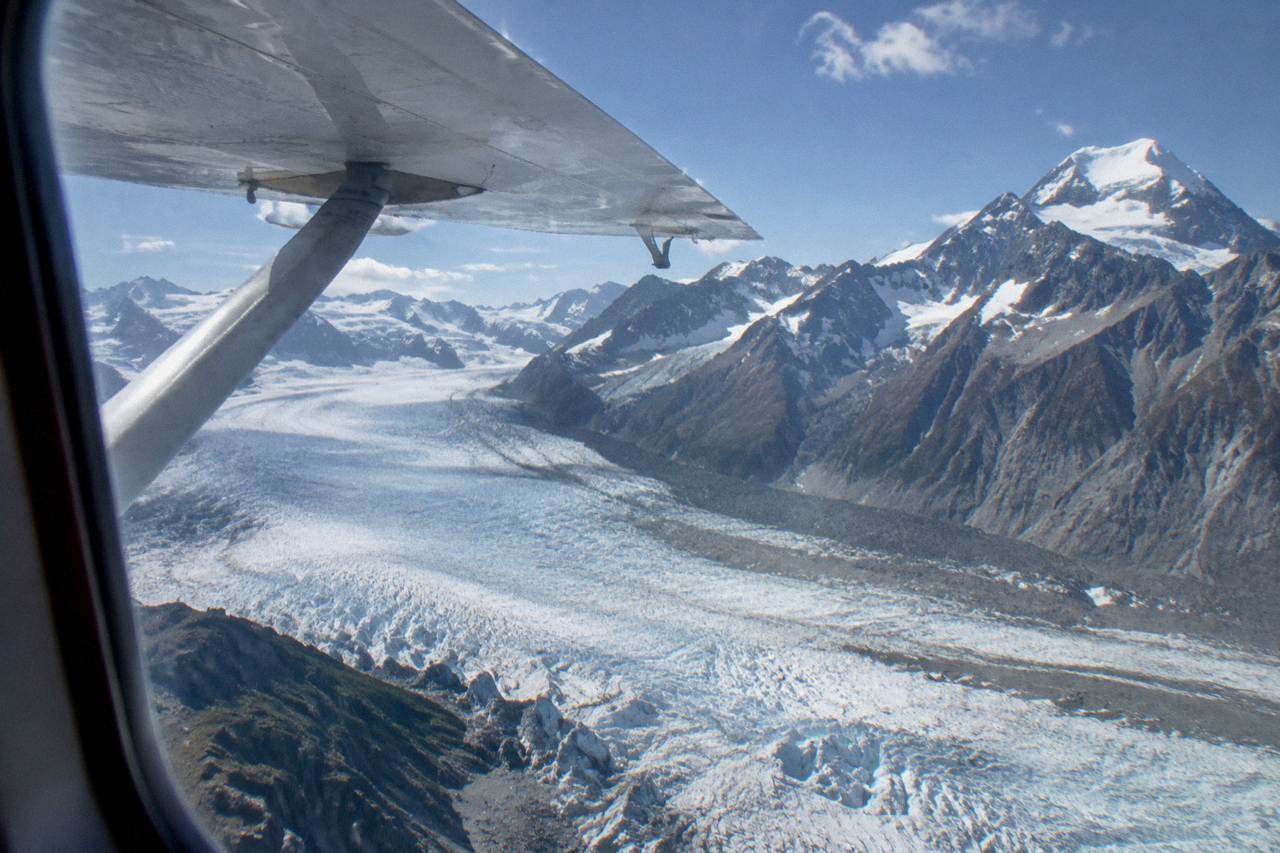
Mount Cook Ski Planes and Helicopters has flown sightseeing trips from Aoraki Mount Cook Airport since 1955, and today photographers can book that heritage two ways: a Pilatus Porter ski plane with 9 seats, or a helicopter seating 5 to 7 depending on weight. The question that separates them is not which flies closer to the ice, it is which one treats a camera better, and the answer sits in four practical details: the window, the wing, the seat you are assigned, and the minutes you get on the snow. Both aircraft land on the Tasman Glacier, New Zealand's largest at 23 km long, so the scenery is largely shared. The differences are mechanical and procedural, and they matter more than any spec sheet suggests. For the wider picture on pricing, snow time, and how weather can change either flight, the guide to glacier landings at Mount Cook spells it all out.
The honest summary up front: the ski plane gives more passengers a window seat and a high wing that sits behind the camera's view, while the helicopter gives a wider field of view from more seats but puts glass, frame and rotor between you and the peak. Neither is a private air charter, and neither lets you choose your seat, the pilot assigns seats for weight and balance, which is the single biggest variable a photographer surrenders at check-in. For a fuller treatment of the trade-offs beyond photography, the Mount Cook ski plane vs helicopter guide covers duration, price and ride feel.
Neither aircraft wins outright, and the honest answer depends on your priorities: the ski plane seats 9 with seats assigned by weight, while helicopter seating is not mentioned, so check the live booking page for cabin details before choosing your flight. For time standing still on the glacier, several flights in both aircraft allow 10 to 15 minutes on the snow.
The ski plane's case rests on geometry. A Pilatus Porter is a high-wing aircraft: the wing mounts above the cabin, so when you shoot downward toward a glacier the wing is behind and above your camera rather than crossing the frame. The ski plane cabin carries 9 seats, with seating assigned by weight and balance rather than by passenger choice. The trade is that seats are assigned by weight and balance rather than picked for the view, so a prime photo position is not guaranteed.
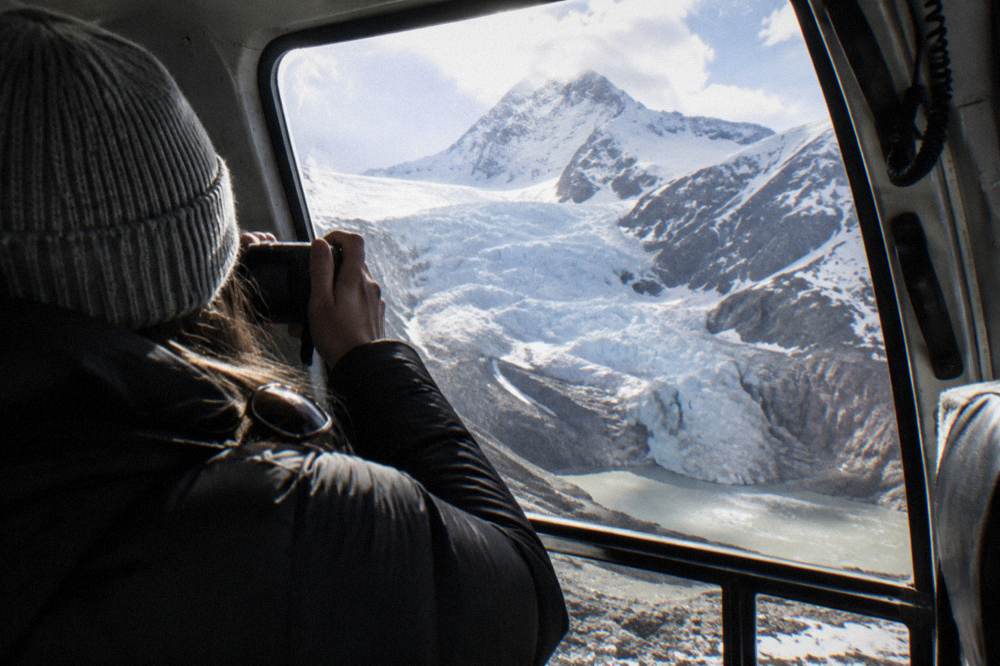
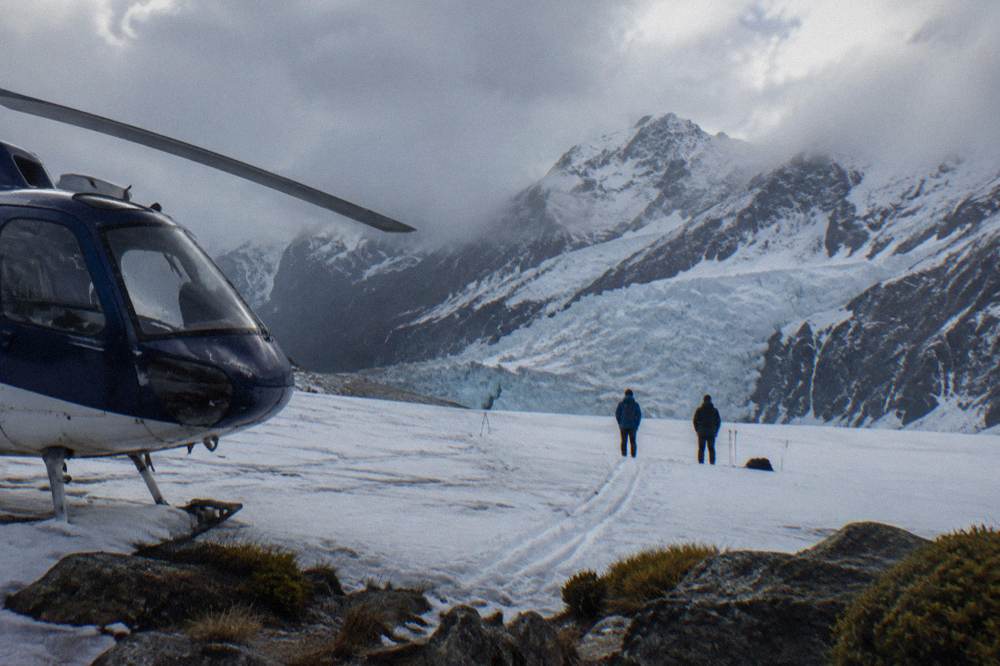
The helicopter's case rests on openness. More of the cabin is glazed, and in many seats you can see forward and to the side at once, which helps when the pilot turns toward Aoraki at 3,724 m, New Zealand's tallest peak. The trade is the rotor: blades, hub and frame enter the top of many wide shots, and the cabin glass is curved, which distorts horizons near the edges. A polarizing filter helps in both aircraft but fights the curved glass of a helicopter more than the flatter pane of a ski plane.
There is also a third path that solves the choice instead of adjudicating it. The Mount Cook ski plane and helicopter glacier combo flies one aircraft out to the Tasman Glacier and the other back, a 45-minute combo rated 4.7 across 378 reviews, from $277.00 per person, with a snow landing of 10 to 15 minutes and check availability on the operator's page. One booking, both sets of windows.
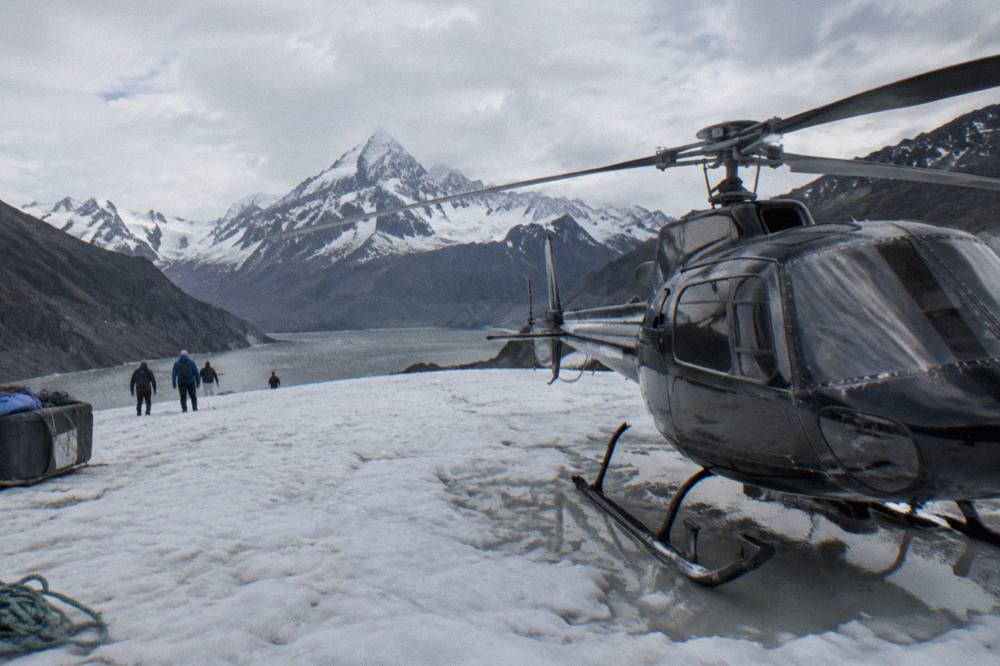
What Does A Ski Plane Give A Photographer At Mount Cook?
A ski plane gives a 9-seat high-wing cabin in which most passengers shoot from a window seat with the wing held above the camera's view, plus glacier landing flights that state 10 to 15 minutes on the snow. It is the steadier platform for long-lens work, and it is the aircraft the operator has flown from the airport since 1955.
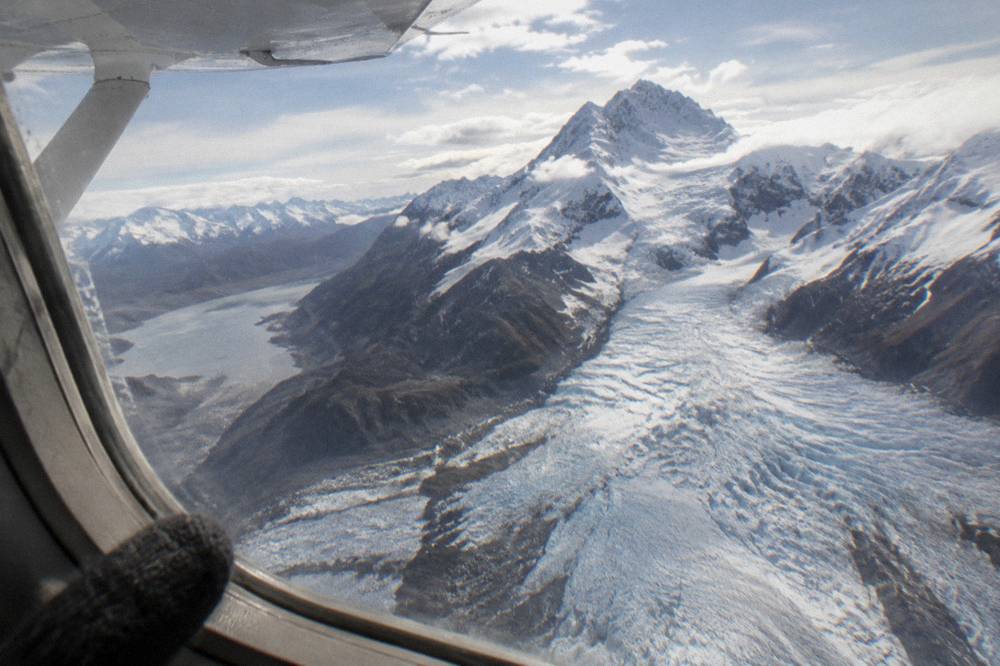
The fixed-wing geometry rewards a specific kind of photography. Because the wing sits above and behind the cabin, a passenger shooting down at the Hochstetter Icefall or the neve of the Tasman Glacier works with a clean lower frame, and because the aircraft banks gently rather than pivoting, tracking a subject at 200 mm is more forgiving. The operator's own pages describe the ski plane operation as part of the only place in the Southern Hemisphere with year-round glacier landings by ski plane, a claim worth reading in full on the operator's site.
The window itself is the compromise. It is a fixed pane, so you cannot shoot open-air, and on bright snow days it can reflect cabin clothing and interior lights back into a lens. A lens hood pressed close to the glass, dark clothing and a polarizer each reduce the problem. The 45-Minute Glacier Highlights ski plane tour from Mount Cook, from $397.02 per person and rated 5.0 across 21 reviews, is a ski-plane-only flight that states 10 to 15 minutes on the snow, which is time spent standing on the glacier with the camera out of the aircraft entirely. To weigh that flight against the other options at Aoraki / Mount Cook, the guide to every ski plane flight at Mount Cook compares routes, prices and snow landings side by side.
One more ski plane advantage deserves a line: it lands on skis directly onto the glacier, and the operator notes that a glacier landing gives more certainty of snow all year than an alpine landing on a ridge snowfield, which can be bare of snow roughly December to March. For a photographer whose goal is ice and snow texture, that difference can decide the booking.
What Does A Helicopter Give A Photographer At Mount Cook?
A helicopter gives a small 5 to 7 seat cabin with wide, curved glazing and sight lines that extend forward from most seats, plus landing flights from as little as $194.00 per person. It is the aircraft with the most reviewed flight departing Mount Cook Airport, the scenic alpine landing at 4.7 across 530 reviews, and it turns toward subjects rather than banking past them.
The helicopter's strongest photographic asset is the pivot. A pilot can hold a turn so both sides of the cabin pass a peak in sequence, which effectively gives every passenger a pass at Aoraki or the Main Divide. The curved glass is the cost: near the frame edges it bends straight horizons, and the rotor enters the top of wide-angle frames. Shooting with the lens centered in the flattest part of the pane is the standard workaround.
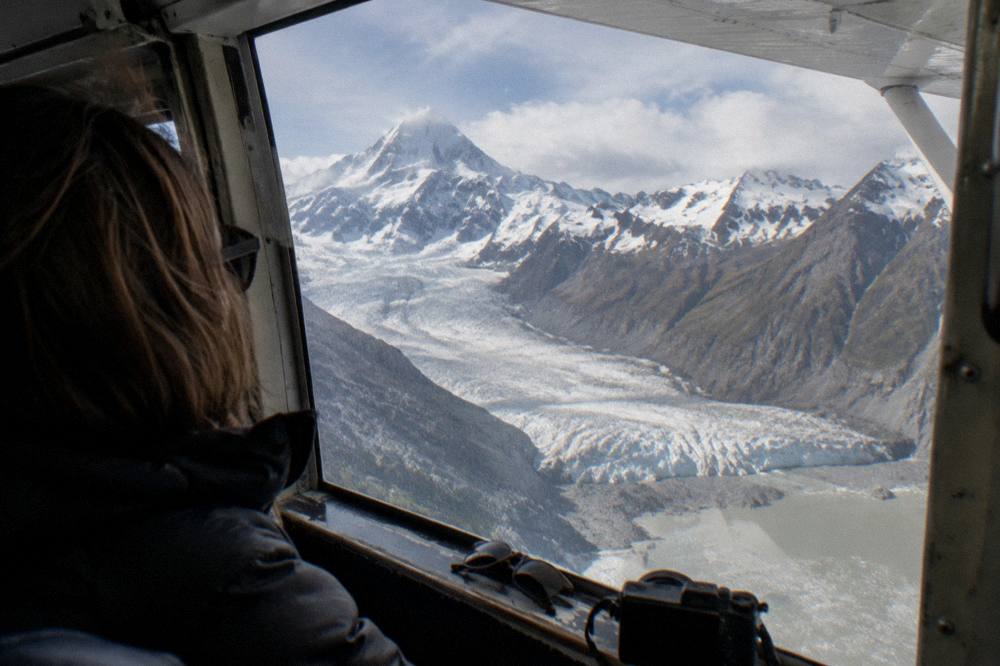
The Mount Cook: Scenic Helicopter Flight with Alpine Landing, from $194.00 per person and rated 4.7 across 530 reviews, is the most reviewed flight departing Mount Cook Airport. Its stated total duration is a 25-minute scenic flight with an alpine landing; remember from the earlier section that an alpine landing sits on a peak or ridge snowfield, and the operator says the exact site is confirmed on the day. The 45-Minute Glacier Highlights Helicopter Tour from Mount Cook, also from $397.02 per person, rated 4.8 across 59 reviews, mirrors the ski plane's glacier landing with the same stated 10 to 15 minutes on the snow.
Both helicopter products named here are single-aircraft flights from Mount Cook Airport on SH80. If you are weighing ride comfort and narrative alongside the photos, the Mount Cook helicopter flights guide sets out the full set of operators and bases.
The 25-minute alpine landing flight is also the right place to temper expectations: with a 25-minute stated duration that includes the landing, time with the engine off is short, and photographers who want sustained composition time on the ice should look to the 45-minute glacier products or the 3-hour heli hikes, where up to 2 hours on the glacier is stated.
How Do Seats And Windows Decide Your Photos?
Seats cannot be chosen on these flights: the pilot assigns them for weight and balance, and passengers may be weighed at check-in. That means a photographer books an aircraft and a seat count rather than a seat, which is why the ski plane's 9-seat cabin with a window for more passengers is a real advantage over a 5 to 7 seat helicopter cabin where seats share sides.
This is the detail most photographers learn only at the airport. On the operator's own terms, seat requests are not accepted, infants on laps still occupy a charged seat, and the individual weight limit is generally 116 kg on the Mount Cook Airport flights. None of this is negotiable at check-in, and none of it is a comment on your camera gear, it is how a light aircraft stays balanced near terrain. The full index of guides sits on Mount Cook Ski Plane.
The practical consequence differs by aircraft. In the ski plane, the 9-seat layout means a middle-of-cabin passenger still sits within reach of a window pane. In the helicopter, seats are assigned by weight and balance, so you do not get to pick a position, and the angle you photograph from depends on where you are seated. If two people are traveling together and one is the serious shooter, the honest tactic is to accept the assigned seats rather than argue the assignment on the ground.
| Flight | Aircraft | Seats context | Window outlook for photos |
|---|---|---|---|
| 45-Minute Glacier Highlights Ski Plane Tour | Ski plane | 9-seat Pilatus Porter cabin | High wing above frame, window panes for most seats |
| Grand Circle Ski Plane (1 hour 5 minutes) | Ski plane | 9-seat cabin, 55-minute stated duration | Same high-wing geometry, crosses the Main Divide toward Fox and Franz Josef glaciers |
| 45-Minute Glacier Highlights Helicopter Tour | Helicopter | Helicopters seat 5 to 7 depending on weight | Wide curved glazing, rotor visible in top of wide shots |
| 55-Minute Grand Circle Helicopter | Helicopter | 5 to 7 seats, 55-minute stated duration | Same glazing, longer route over more glaciers |
| Lake Tekapo Mount Cook and Beyond flight | Fixed-wing | Window seat for every passenger stated | Guaranteed window, but a no-landing overflight |
The fixed-wing row deserves its own comment. Air Safaris states a window seat for every passenger on its Grand Traverse flights from Tekapo, about 50 minutes of flying over about 200 km with no landing, per the operator's Grand Traverse page. For a photographer whose priority is an unshared pane and who accepts no snow landing, that is a third geometry worth pricing at from $313.00 per person, rated 4.9 across 138 reviews.
How Much Time On The Snow Does Each Flight Give?
Only a few flights spell out snow time, and those that do allow 10 to 15 minutes on the snow: the Glacier Highlights and Grand Circle tours and the ski plane and helicopter combo. Snow time is where a photographer works outside glass entirely, so it is worth reading as its own line item rather than assuming it from the price.
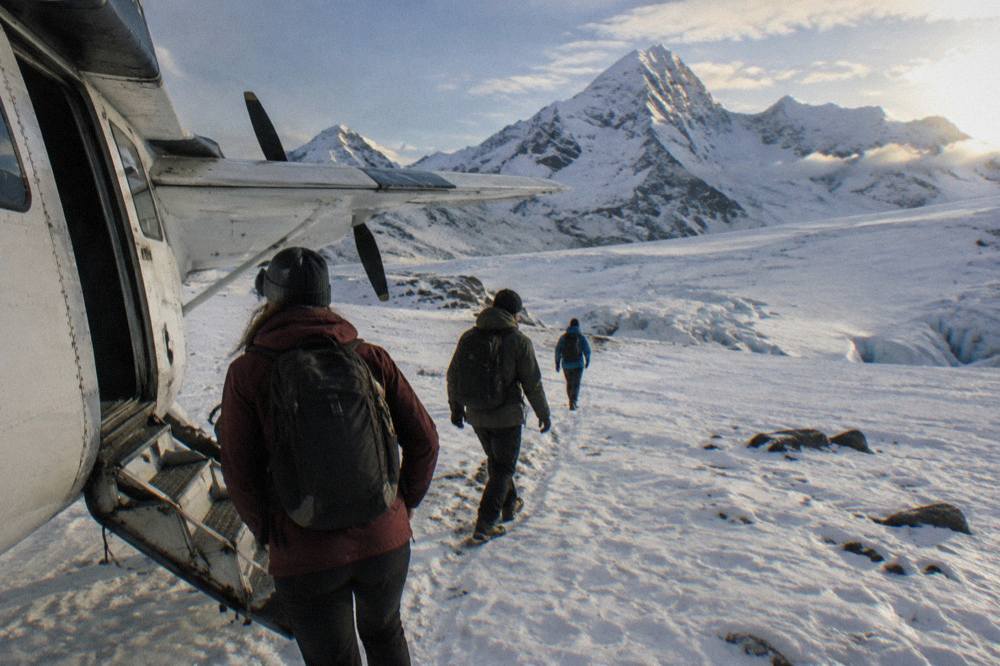
Time standing on a glacier is the part of the flight no window can replicate. The camera leaves the aircraft, the glare filter disappears, and the subject becomes texture: blue ice, crevasse fields, and the scale of a glacier up to 3 km wide. The flights that state snow minutes in their booking details are listed below exactly as they state them.
| Flight | Price from, per person | Stated snow time | Reviews |
|---|---|---|---|
| Ski plane and helicopter combo flight | $277.00 | 10-15 minutes | 4.7, 378 reviews |
| 45-Minute Glacier Highlights Ski Plane Tour | $397.02 | 10-15 minutes | 5.0, 21 reviews |
| Grand Circle Ski Plane (1 hour 5 minutes) | $453.82 | 10-15 minutes | 5.0, 16 reviews |
| 45-Minute Glacier Highlights Helicopter Tour | $397.02 | 10-15 minutes | 4.8, 59 reviews |
| 55-Minute Grand Circle Helicopter | $453.82 | 10-15 minutes | 4.7, 42 reviews |
| Mountains High 40-Minute Helicopter (Glentanner) | $404.88 | 5-10 minutes | 4.8, 61 reviews |
| Alpine Explorer Helicopter (Glentanner) | $346.62 | 10 minutes | 4.2, 27 reviews |
Read the table honestly: where a flight shows no snow minutes, the booking page does not say, and nothing should be assumed. Landings on every one of these flights depend on weather and the pilot's judgement on the day, so even a stated snow time is a plan, not a promise. The two 3-hour heli hikes, from $552.00 per person, are the outlier: the operator states up to 2 hours on the glacier itself, with 15 minutes of helicopter each way, which turns the flight into an approach and the glacier into the shoot. The guide to Fox Glacier helicopter flights toward Mount Cook spells out what each crossing includes, from time over the ice to whether a snow landing features in the itinerary.
For photographers weighing that trade specifically, the Tasman Glacier heli hike guide covers gear, minimum ages and what the guided time on the ice involves.
What Camera Rules Apply On Mount Cook Flights?
Drones and selfie sticks are not permitted on these flights, sunglasses are advised for strong snow glare, and landing sites run typically 1 to 3 degrees cooler than the airport. Beyond that, the working rules are physical: shoot through the flattest part of the pane, dress your lens against reflections, and keep batteries warm because cold snowfields drain them fast.
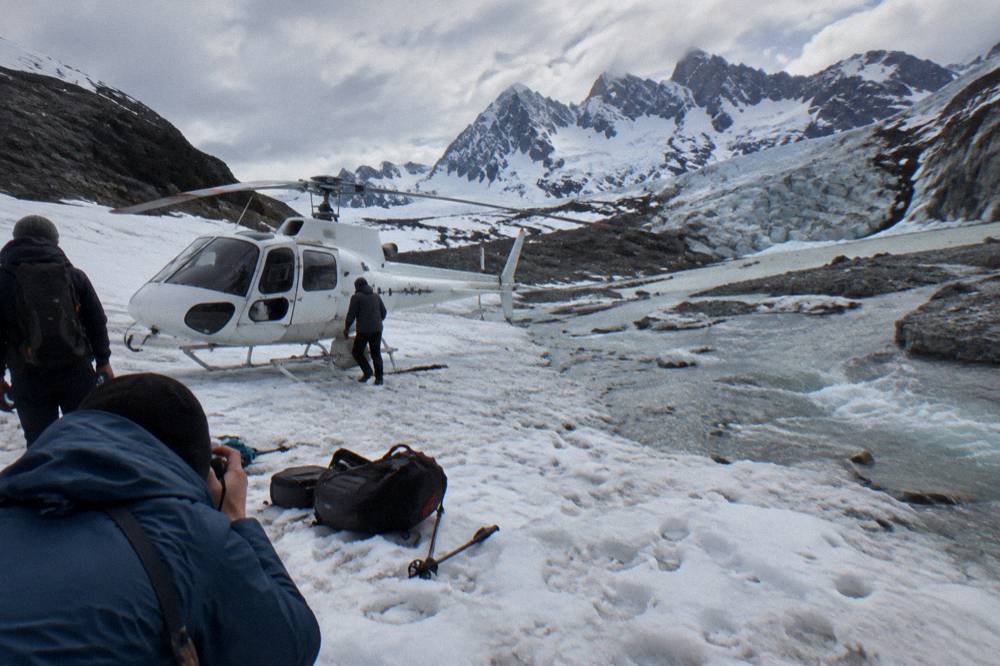
The drone and selfie stick ban comes from the operator's own terms and is stated plainly. It exists for flight safety, and the operator does not permit drones or selfie sticks, so check the live booking page for the full rules before you pack. Cameras and phones are welcome aboard; the operator does not permit drones or selfie sticks on the aircraft.
Clothing advice doubles as photo advice. The operator recommends warm layers, sturdy closed-toe shoes and sunglasses, with landing sites cooler than the airport. For a photographer that translates to gloves you can work a shutter in, a lens cloth for pane condensation, and a polarizer for glare off the snowfield. Camera phones work well from these cabins; a phone held flat against the glass kills most reflections.
Weather is the last rule and the least negotiable. Flights run seven days a week weather permitting, decisions can come from early morning until about 10 minutes before departure, and a weather cancellation by the operator means a full refund or a free reschedule. Booking terms on the pages here add free cancellation with a full refund up to 24 hours before start. Reading the mountain forecast before you shoot, on MetService's Aoraki Mount Cook page, is part of the craft.
Which Mount Cook Flight Gives The Best Photo Value?
Value for a photographer is snow time plus window access per dollar: the ski plane and helicopter combo at from $277.00 per person offers both aircraft and 10 to 15 stated snow minutes for less than the single-aircraft 45-minute flights at from $397.02, while the 25-minute alpine landing helicopter at from $194.00 is the cheapest way into a landing among flights with 15 or more reviews.
Compare like with like and the value ladder becomes clear. The cheapest and dearest claims below are made only among flights with 15 or more reviews, with the counts named.
| Flight | From, per person | Stated duration | Landing | Photo angle |
|---|---|---|---|---|
| Scenic Helicopter with Alpine Landing | $194.00 | 25 minutes | Alpine, site confirmed on the day | Budget entry, wide cabin views, short ice time |
| Ski plane and helicopter combo | $277.00 | 45 minutes | Glacier snow landing, 10-15 min | Both aircraft, one glacier standing session |
| Franz Josef two-glacier 35-minute trip | $274.00 | 35 minutes | Snow landing, 10 min stated | West Coast alternative, 4.9 from 545 reviews |
| Grand Circle ski plane or helicopter | $453.82 | 55 minutes to 1 h 5 m | Glacier snow landing, 10-15 min | Main Divide crossing, longest stated route |
| 3-Hour Tasman Glacier heli hike | $552.00 | 3 hours | Up to 2 hours on the glacier | Maximum time on the ice, 4.9 from 344 reviews |
The Grand Circle deserves the photographer's attention despite the price. The operator describes it as the flight that crosses the Main Divide to the Fox and Franz Josef glaciers before landing on the Tasman Glacier, which is the most varied subject list of any stated route here: two West Coast glaciers, the divide, and the landing. The Helicopter Line's equivalent 55-minute product from Glentanner Park, from $538.86 per person and rated 4.7 across 142 reviews, covers similar ground from a different base, per the operator's own page, and remember Glentanner Airport is a different airfield from Mount Cook Airport, about 15 minutes before the village.
Note also that a bigger budget does not buy a better view, it buys more minutes and more subjects. Every flight from Mount Cook Airport flies the same park and the same peak, and the view of the summit itself depends on cloud, not currency. The choice of aircraft changes the frame and the glass, the choice of route changes how many glaciers fill it, and the weather decides the rest.
There is no wrong aircraft here, only mismatched expectations. A photographer who wants clean downward frames and a window seat takes the ski plane. A photographer who wants the pivot, the wide glass and the lowest entry price takes the helicopter. A photographer who wants the story of both takes the combo, and a photographer who wants hours on the ice books the hike. Match the tool to the shot list, arrive by the check-in time in your booking email, and let the pilot handle the seats.
Common Questions About Photographing Mount Cook Flights
Is The Ski Plane Or The Helicopter Better For Photos At Mount Cook?
The ski plane gives more passengers a window behind a high wing that stays out of downward frames; the helicopter gives wider sight lines and can pivot toward a peak but puts rotor and curved glass in many shots. Both offer glacier landings with 10 to 15 stated snow minutes on the longer flights.
Can You Choose Your Seat On A Mount Cook Flight?
No. Seats are assigned by the pilot for weight and balance and cannot be chosen, and passengers may be weighed at check-in. The individual weight limit is generally 116 kg on the Mount Cook Airport flights.
Are Drones Allowed On Mount Cook Scenic Flights?
No. The operator's terms prohibit drones and selfie sticks on the flights. Photography with handheld cameras and phones is fine.
How Long Do You Spend On The Snow On A Glacier Landing Flight?
Flights that state snow time give 10 to 15 minutes on the 45 and 55-minute glacier flights, and 5 to 10 minutes on the 40-minute Glentanner helicopter flight. The 3-hour heli hikes state up to 2 hours on the glacier.
Do Any Flights Guarantee A Window Seat For Photos?
The Air Safaris fixed-wing flights from Tekapo state a window seat for every passenger, but they are overflights with no landing. The ski plane and helicopter flights from Mount Cook Airport assign seats rather than guaranteeing them.
What Happens To My Photos If The Flight Is Cancelled For Weather?
A weather or operational cancellation by the operator means a full refund or a free reschedule, and booking terms here add free cancellation up to 24 hours before start. Booking early in your stay leaves room to rebook if the mountain closes in.